Kyle Tucker Projected to Sign Massive Contract with Toronto Blue Jays in Game-Changing Deal
The MLB offseason is heating up, and one of the biggest dominoes is expected to fall soon. Kyle Tucker, arguably the most coveted position player available in free agency, is projected to land with the Toronto Blue Jays in a contract that could reshape the American League landscape for years to come. With a price tag approaching $400 million, Tucker's decision will send shockwaves through baseball and potentially determine which teams compete for championships over the next decade.
The free agency race for Tucker has narrowed to three primary contenders: the Toronto Blue Jays, New York Yankees, and Los Angeles Dodgers. Each franchise brings compelling advantages to the table, from Toronto's aggressive spending spree to New York's storied legacy and Los Angeles' recent championship success. However, recent projections suggest that the Blue Jays have positioned themselves as the frontrunner to secure Tucker's services, marking a potential turning point in the franchise's pursuit of its first World Series title since 1993.
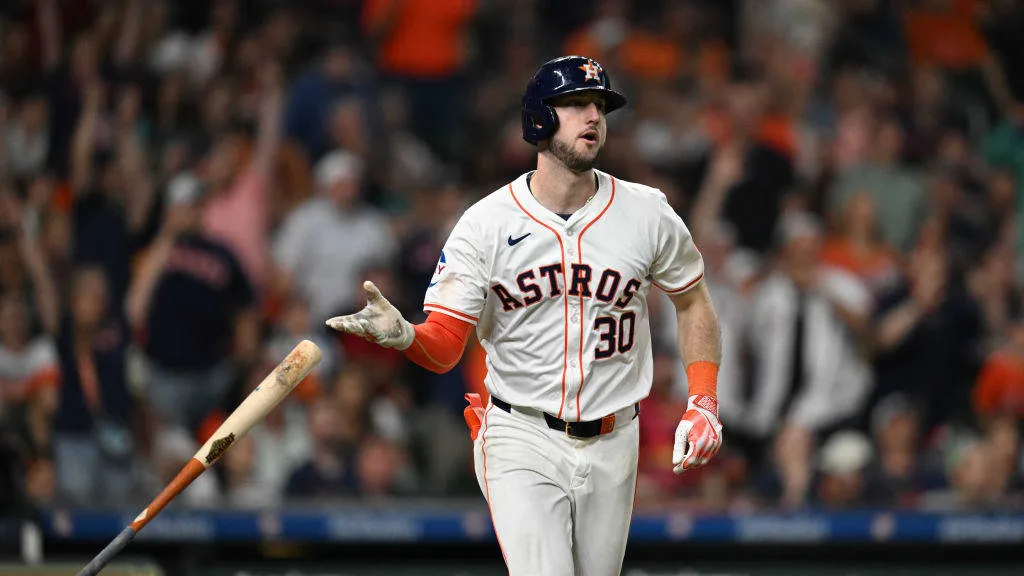
Toronto's All-In Approach Signals Championship Ambitions
The Blue Jays have made their intentions crystal clear this offseason: they're going all-in to build a championship roster. Toronto's front office has already opened the checkbook in a big way, adding significant talent through free agency and demonstrating a willingness to compete financially with any team in baseball. This aggressive approach represents a marked shift in the organization's philosophy and signals to fans that management believes the window for contention is open right now.
According to projections from Sportsnaut's Matt Johnson, the Blue Jays represent the most likely destination for Tucker's talents. Johnson pointed to Toronto's financial commitment and organizational needs as key factors favoring the Canadian franchise. The team has reportedly met with Tucker's representatives and received positive feedback about the possibility of joining the Blue Jays' core of young, talented players.
Toronto's willingness to engage in a bidding war gives them a significant edge in negotiations. While other teams may have budget constraints or competing priorities, the Blue Jays appear ready to make whatever financial commitment is necessary to land their target. This approach has already paid dividends earlier this offseason, and Tucker could be the crown jewel that transforms Toronto from playoff hopeful to legitimate World Series contender.
The addition of Tucker would address one of the team's most glaring weaknesses. Toronto ranked 14th in OPS at the outfield position last season, posting a collective .732 mark that fell well short of championship standards. Tucker's elite production would immediately upgrade the lineup, providing the kind of middle-of-the-order threat that championship teams require. His combination of power, on-base ability, and defensive versatility makes him an ideal fit for a team looking to take the next step toward contention.
What Makes Kyle Tucker Worth Nearly $400 Million?
To understand why teams are willing to commit such astronomical sums to Tucker, it's essential to examine what makes him special. The 28-year-old outfielder represents the complete package: elite offensive production, solid defensive capabilities, and a track record of durability and consistency that justifies a long-term investment.
Tucker's offensive credentials are impeccable. He's consistently ranked among the league leaders in key offensive categories, posting impressive power numbers while maintaining a strong on-base percentage. His ability to hit for both average and power makes him a rare commodity in today's game, where players often sacrifice contact ability for launch angle and exit velocity. Tucker has managed to excel in both areas, making him one of the most balanced hitters in baseball.
Defensively, Tucker brings versatility and reliability. While he may not win Gold Glove awards, he's a solid outfielder who can handle all three positions competently. This flexibility provides tremendous value to any manager, allowing for strategic lineup construction and defensive alignments. In an era where defensive metrics are increasingly valued, Tucker's ability to contribute positively on both sides of the ball enhances his worth significantly.
Perhaps most importantly, Tucker has demonstrated remarkable consistency and health throughout his career. Unlike some star players whose value is diminished by injury concerns or fluctuating performance, Tucker has established himself as someone teams can count on to produce at a high level year after year. This reliability is precisely what justifies the massive contract he's expected to command—teams aren't just paying for what Tucker can do at his peak, but for the confidence that he'll maintain that level for the duration of his contract.
The market for elite position players has exploded in recent years, with teams recognizing that true superstars are increasingly difficult to acquire through trades or internal development. When a player of Tucker's caliber becomes available in free agency during his prime years, it creates a perfect storm of demand that drives contract values to unprecedented levels. The projected $400 million price tag reflects not just Tucker's individual value, but the scarcity of players who can truly transform a franchise's fortunes.

Why the Yankees and Dodgers May Fall Short
While the Yankees and Dodgers remain in the conversation for Tucker's services, each team faces significant obstacles that may prevent them from landing the star outfielder. Understanding these challenges provides context for why Toronto has emerged as the favorite in this race.
The Yankees have long been synonymous with big spending and marquee free agent acquisitions, but recent organizational decisions suggest they may not be willing to go to the lengths necessary to outbid Toronto. New York's front office has shown increased concern about staying under luxury tax thresholds and avoiding the most severe penalties associated with repeat offender status. While they certainly have the financial resources to sign Tucker, their willingness to commit nearly $400 million to a single player remains uncertain.
Additionally, the Yankees' outfield situation is complicated by existing roster commitments and the presence of other talented players who need playing time. Adding Tucker would necessitate difficult roster decisions and potentially block the development of younger players the organization values. These considerations may lead New York to pursue alternative strategies for upgrading their roster rather than committing to such a massive deal.
The Dodgers present a different set of challenges. Reports indicate that Los Angeles is only interested in offering Tucker a three- or four-year contract rather than the long-term deal he's seeking. This fundamental disconnect in contract length expectations may prove insurmountable, regardless of the annual value the Dodgers might be willing to offer. While a shorter, higher-average-annual-value deal might appeal to some players, Tucker's age and track record suggest he'll prioritize long-term security.
The Dodgers' reluctance to offer a lengthy contract likely stems from their recent experience with mega-deals and a desire to maintain roster flexibility. Los Angeles has committed hundreds of millions to other stars and may be hesitant to further restrict their financial maneuverability by adding another massive long-term contract. Unless the team dramatically changes its approach, the Dodgers appear unlikely to meet Tucker's market demands.
How Tucker Transforms Toronto's Championship Window
If Tucker does indeed sign with the Blue Jays, the impact on the franchise and the American League East division would be profound and immediate. Toronto would instantly become one of the most formidable offensive teams in baseball, boasting a lineup that could match up against any pitching staff in the league.
The addition of Tucker would create a domino effect throughout Toronto's roster construction. With a legitimate superstar anchoring the outfield, the pressure on other players decreases, allowing them to slot into more appropriate positions in the batting order. This ripple effect can't be overstated—when one player significantly upgrades a lineup spot, it improves the entire offense by allowing everyone to hit in positions that better suit their skillsets.
Toronto's pitching staff would also benefit from the offensive upgrade. Knowing they have a powerful lineup behind them allows pitchers to attack hitters more aggressively rather than pitching defensively to avoid giving up runs. The psychological impact of having a dominant offense cannot be quantified easily, but it manifests in countless small ways that contribute to winning baseball games.
From a competitive standpoint, Tucker's arrival would immediately elevate Toronto into the upper echelon of American League contenders. The Blue Jays would join the Yankees, Baltimore Orioles, Tampa Bay Rays, and potentially others in what promises to be one of the most competitive divisions in baseball. However, unlike some of their divisional rivals, Toronto would boast an elite combination of power hitting, on-base ability, and defensive capability that could give them an edge in tight playoff races.
The timing of this potential signing aligns perfectly with Toronto's competitive window. The team's core players are entering their prime years, and the front office has clearly decided that the moment to strike is now rather than later. By adding Tucker to an already talented roster, the Blue Jays are maximizing their chances of breaking through to win a championship during this crucial period.

The Ripple Effects on MLB's Free Agent Market
Tucker's decision will have significant implications that extend far beyond just the three teams involved in his free agency. The contract he signs will set important precedents for future negotiations and influence how teams approach roster construction going forward.
First and foremost, Tucker's deal will establish a new benchmark for elite position players entering free agency during their prime years. If he indeed signs for close to $400 million, it will signal to agents and players that the market for superstars remains robust despite various economic pressures facing the sport. This could embolden other free agents to seek similarly lucrative deals, potentially reshaping salary structures across baseball.
The speed with which Tucker's market develops will also impact other free agents waiting to sign. If Tucker commits to a team relatively early in the offseason, it could accelerate the entire market as teams who miss out on him pivot to alternative options. Conversely, a prolonged negotiation process might create a logjam that slows other signings and trades.
For teams that don't land Tucker, the ripple effects could prompt dramatic shifts in strategy. The Yankees or Dodgers, if they come up short in the Tucker sweepstakes, may turn their attention to trades for established stars or pivot to shorter-term free agent acquisitions that provide flexibility. These secondary moves could reshape multiple rosters and alter the competitive balance throughout both leagues.
The contract structure Tucker ultimately accepts will also influence future negotiations. Elements like contract length, opt-out clauses, no-trade protections, and deferred money all set precedents that agents reference in subsequent talks. Whatever terms Tucker's camp negotiates will become talking points in future discussions involving comparable players.
What Happens if the Projections Are Wrong?
While current indicators point toward Toronto as the favorite, baseball's free agent market is notoriously unpredictable. Several scenarios could unfold that would dramatically alter these projections and send Tucker in a different direction.
The Yankees could decide to abandon their recent financial conservatism and make an overwhelming offer that Toronto can't or won't match. New York has a history of making decisive moves when they feel their championship window is closing, and adding Tucker could be viewed as essential to competing with other American League powerhouses. If ownership decides that winning now takes precedence over financial flexibility, the Yankees have the resources to blow away any competing bid.
Similarly, the Dodgers might reconsider their stance on contract length if they determine that Tucker represents a truly unique opportunity. Los Angeles has shown a willingness to be creative with contract structures, and they might propose innovative terms that satisfy Tucker's desire for long-term security while giving the team the flexibility they value. The Dodgers' recent success and attractive lifestyle factors could make them appealing even if their initial contract proposals fall short.
A dark horse candidate could also emerge from an unexpected direction. Teams not currently mentioned in the sweepstakes might decide to make a surprise run at Tucker if they believe his addition would vault them into contention. Baseball history is filled with examples of teams making unexpected big splashes that reshape the landscape, and this offseason could produce another such surprise.
The Final Verdict: Why Toronto Makes Sense
Taking all factors into account, Toronto's position as the projected winner in the Tucker sweepstakes makes considerable sense from multiple perspectives. The Blue Jays have demonstrated financial commitment, organizational need, and competitive ambition that align perfectly with what Tucker is presumably seeking in his next team.
From Tucker's perspective, signing with Toronto offers several advantages. The team is positioned to compete immediately, the contract figures to provide long-term financial security, and joining the Blue Jays would make him the centerpiece of a franchise desperate to return to championship glory. These factors combine to create an attractive destination for a player in Tucker's position.

For Toronto, landing Tucker would represent the culmination of an aggressive offseason strategy designed to vault them into elite status. The investment is substantial, but the potential payoff both in terms of on-field success and franchise marketability could justify the expense. In an era where championship windows can close quickly, the Blue Jays appear determined to maximize their current opportunity.
As the baseball world waits for Tucker's decision, one thing remains clear: wherever he signs, the impact will be felt throughout the sport. The Blue Jays may be favored, but until Tucker puts pen to paper, anything remains possible in what promises to be one of the most significant free agent decisions in recent memory.
Super Bowl LX 2026 Could Be the Most Electrifying Yet: Patriots vs. Seahawks and a Halftime Show Fans Can’t Stop Talking About

Super Bowl LX is still on the horizon, but excitement around the NFL’s biggest night of 2026 is already reaching a fever pitch. From early matchup projections that have fans dreaming of a Patriots vs. Seahawks showdown to buzzworthy halftime show rumors involving global superstar Bad Bunny and punk rock legends Green Day, the conversation has begun—and it’s only getting louder.


 For fans, that means:


Comments 0