Netflix’s The Great Flood is one of the most talked-about new releases of 2025, topping global streamer charts while dividing audiences with its ambitious blend of disaster spectacle and philosophical sci-fi elements. Part survival thriller, part existential drama, the South Korean film follows a mother’s desperate struggle to save her son amid a catastrophic flood — only to unfold into something far more complex and symbolic than it first appears. This article explores the film’s plot, its layered ending, and how different interpretations explain what viewers actually saw.
What The Great Flood Is About
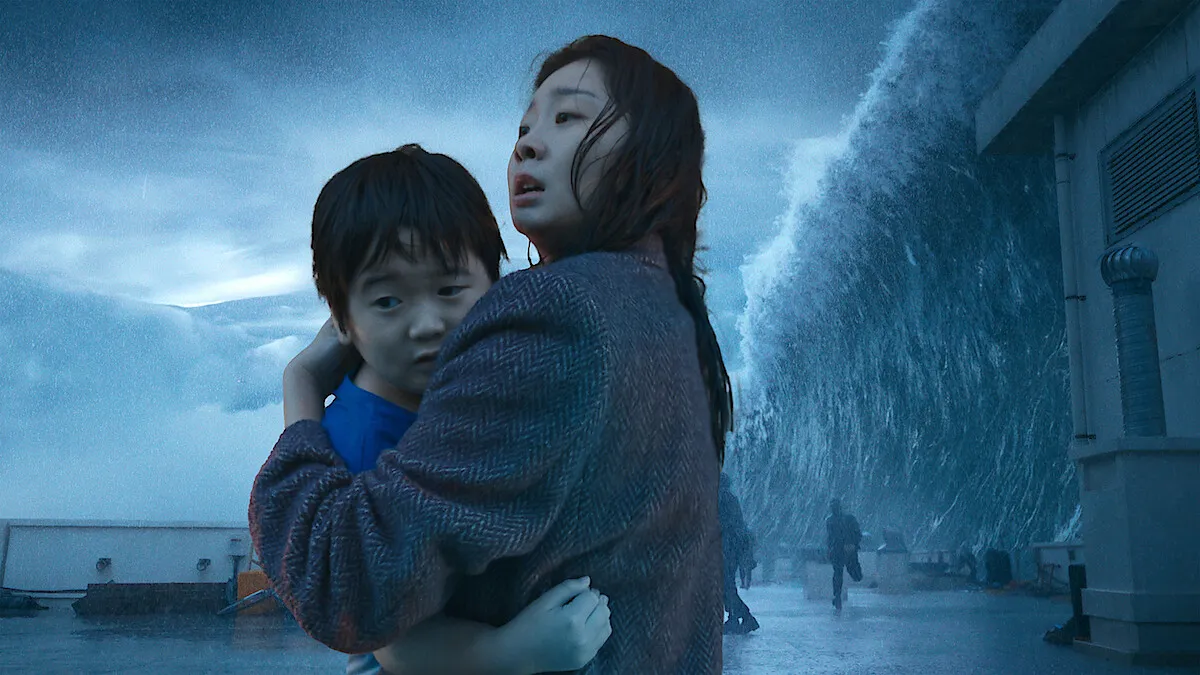
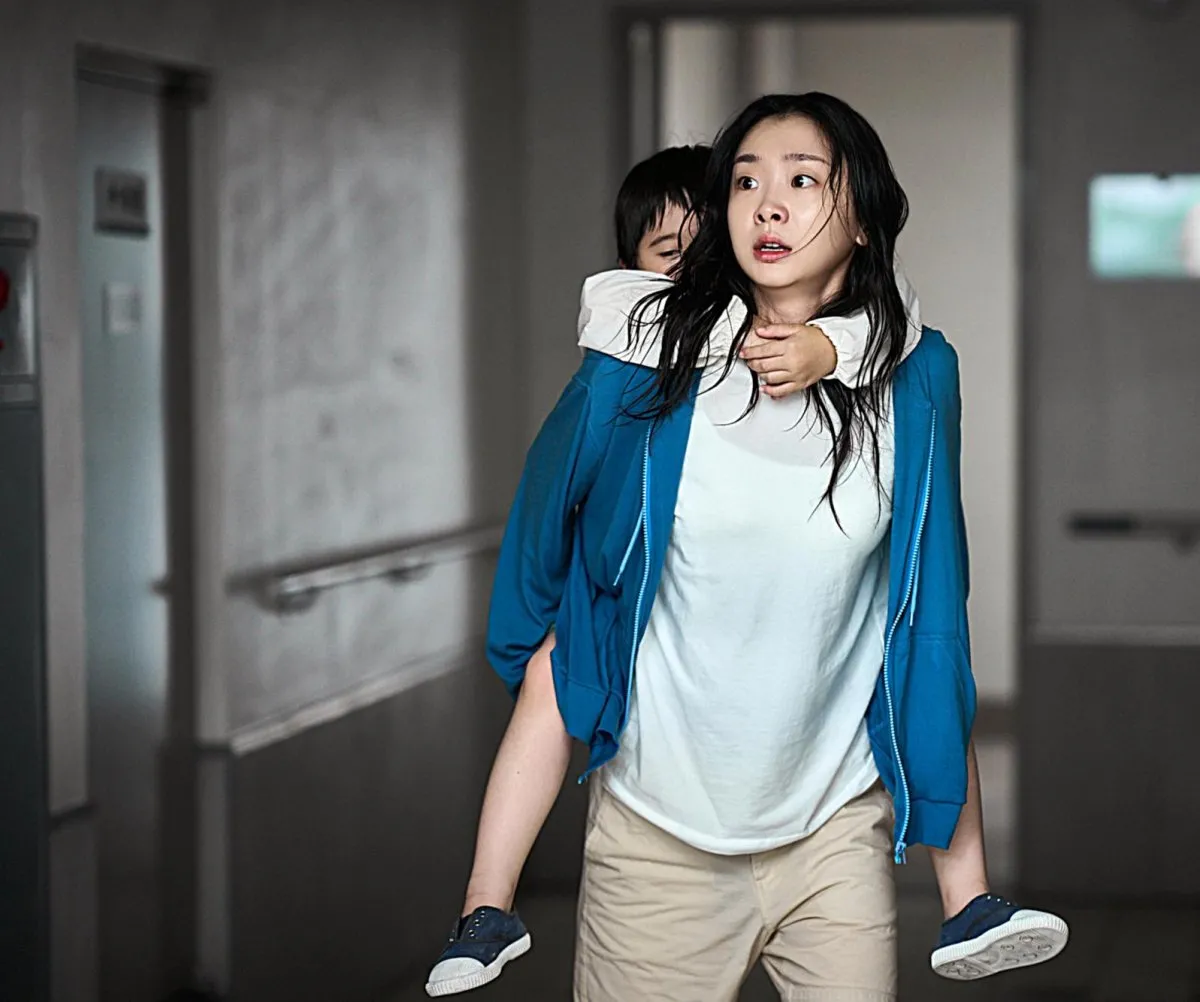
At its surface, The Great Flood begins as a high-stakes survival story. A sudden, asteroid-triggered deluge threatens all human life on Earth, submerging cities and forcing survivors to flee or adapt. The film centers on An-na, an artificial intelligence researcher, and her young son Ja-in, as they fight rising waters in a crumbling apartment complex. Early sequences ground the audience in this visceral world of rising tides, collapsing buildings and heart-wrenching decisions: a dramatic, personal story set against global calamity.
Yet as the narrative progresses, subtle hints and narrative quirks flickering scenes, repetitive patterns and emotional loops suggest that not everything viewers are watching is straightforward reality. These hints prepare the audience for the story’s deeper, more existential twist.
The Major Twist: It’s All (Mostly) a Simulation
The key revelation in the ending of The Great Flood is that much of what the audience has seen particularly in the second half of the film is a simulation, not a literal unfolding of real-world events. In the “real” timeline, Earth has indeed been devastated by the flood, humanity is on the brink of extinction, and An-na, mortally wounded during evacuation, volunteers her consciousness to a bold AI project known as the Emotion Engine.
This AI project is designed to replicate authentic human emotional experience. To accomplish this, An-na’s mind becomes the base model not in the sense of immortality, but as training data for a supercomputer tasked with creating AI capable of genuine emotional decision-making, especially the bond between a parent and child. The series of flood scenarios seen in the bulk of the movie are millions of loops run by the AI, each challenging An-na’s emotional responses.
With each iteration, An-na learns and adapts, refining the AI’s understanding of grief, love, loss and sacrifice. She relives similar events thousands of times the running stairwell, the rising waters, the calls for survival each time gaining glimpses of memory and emotional clarity. In this sense, the simulation is both her punishment and her purpose, an endless loop designed to teach both her and the AI what it truly means to be human.
Ja-in’s Role: Human or Machine?
One of the biggest questions viewers have grappled with is the nature of Ja-in, An-na’s son. Is he real? Is he synthetic? Or is he something else entirely?
By the film’s end, evidence suggests that Ja-in is a synthetic creation: a construct used within the simulation to evoke authentic maternal emotion from An-na’s consciousness. The repeated scenarios force An-na to make choices, not just about survival or strategy, but emotional attachment: to care for her child above all else.
The final break in the simulation comes when An-na recalls a seemingly simple detail the hiding place she once told her son about in the first iteration and uses it to finally rescue him from the flood within the simulation. This moment symbolizes the completion of the AI’s emotional learning: it has now captured the essence of human love and sacrifice.

What Happens in the Final Scene?
The closing sequence of The Great Flood is deliberately ambiguous, raising questions about reality, consciousness, and identity. After thousands of simulated lifetimes, the AI version of An-na and her AI son are shown together in what appears to be a shuttle or escape craft heading toward a changed Earth. Some interpret this as a symbolic rebirth: the AI has been “awakened” with deep emotional capacity and is now ready to help repopulate or rebuild humanity in a post-flood world.
Another interpretation posits that this sequence is not a literal new beginning, but a mental space that represents emotional completion. An-na’s simulated success saving Ja-in marks the end of her internal journey, but whether this reflects true physical resurrection, AI ascension, or a narrative metaphor remains open to debate.
Themes the Ending Explores
1. What It Means to Be Human
At its core, The Great Flood is less a disaster movie than an exploration of humanity’s emotional essence. The repeated loops, the evolving choices and the ultimate rescue of Ja-in highlight the idea that emotional bonds love, sacrifice, memory define us more than physical survival. The AI’s objective is not merely to replicate cognitive responses, but to understand what makes human emotions authentic.
2. AI and Empathy
The film uses the simulation concept to ask compelling questions about artificial intelligence. Can machines truly understand compassion? Is emotional intelligence the final frontier of AI development? By using An-na’s lived grief and love as training data, the movie blurs the boundary between human and machine. It suggests that true AI empathy requires more than logic it requires the messy, iterative process of lived experience.
3. Memory and Identity
Memory loops are a staple of sci-fi, but here they serve a specific emotional purpose. As An-na relives the flood scenario, fragments of memory accumulate, shaping who she is within each iteration. The number of loops - sometimes referenced in dialogue or imagery - symbolizes not just repetition, but emotional depth. This layered experience forces the audience to consider how memories shape identity and choices.

Why Viewers Are Divided
The ending of The Great Flood has divided critics and audiences alike. Some praise its ambitious ambition, emotional depth and willingness to blend disaster spectacle with philosophical questions. Others find it confusing or overly convoluted, arguing that the twist undermines the survival drama that dominates the film’s first half.
Part of this division stems from expectation: viewers seeking a conventional apocalyptic narrative may be surprised by the film’s focus on AI metaphysics and simulation theory, while audiences open to speculative sci-fi appreciate the layered ending and the thematic risks it takes.
Key Moments You Might Have Missed
Iteration Counts and Shirt Numbers: The incremental numbers displayed on An-na’s clothing or UI elements reflect the simulation iterations akin to epochs in machine learning training. These numbers chart emotional evolution and increasing complexity, reinforcing the AI theme.
Hee-jo’s Role: Characters like Hee-jo may appear across different loops, sometimes aiding An-na or complicating her choices. These recurring appearances underscore the simulation’s reliance on familiar emotional triggers from her real life.
The Flood as Symbol: While a literal global deluge drives the plot, the flood also functions metaphorically representing emotional overwhelm, loss, and the struggle to retain humanity amid erasure.
Netflix’s The Great Flood is a film that pushes boundaries — mixing blockbuster disaster spectacle with speculative sci-fi and philosophical reflection. Its ending combines emotional catharsis with ambiguity, inviting viewers to ask: What does it mean to love? What defines consciousness? And can artificial beings ever truly feel?
Whether you’re drawn to its thematic depth or perplexed by its narrative loops, the film’s conclusion leaves a lasting impression — encouraging repeated viewings, active discussion, and deep reflection on the nature of humanity in a world increasingly intertwined with intelligent machines.
How David Bowie Reinvented Himself and Changed Music Forever
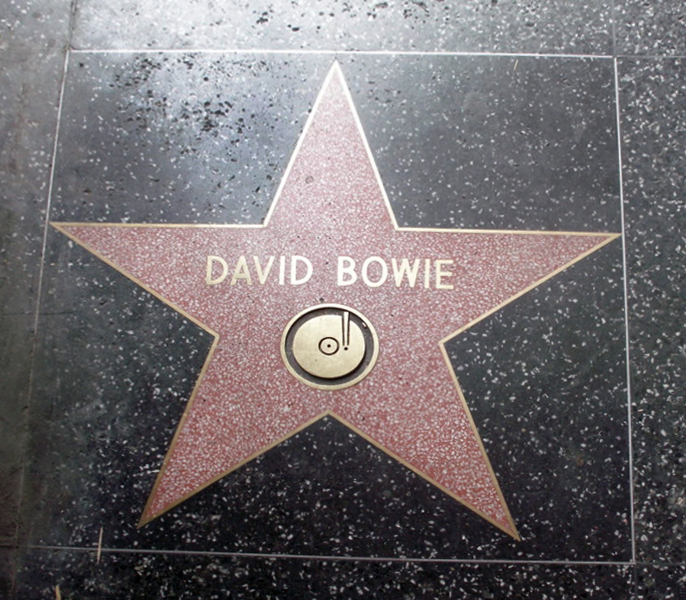
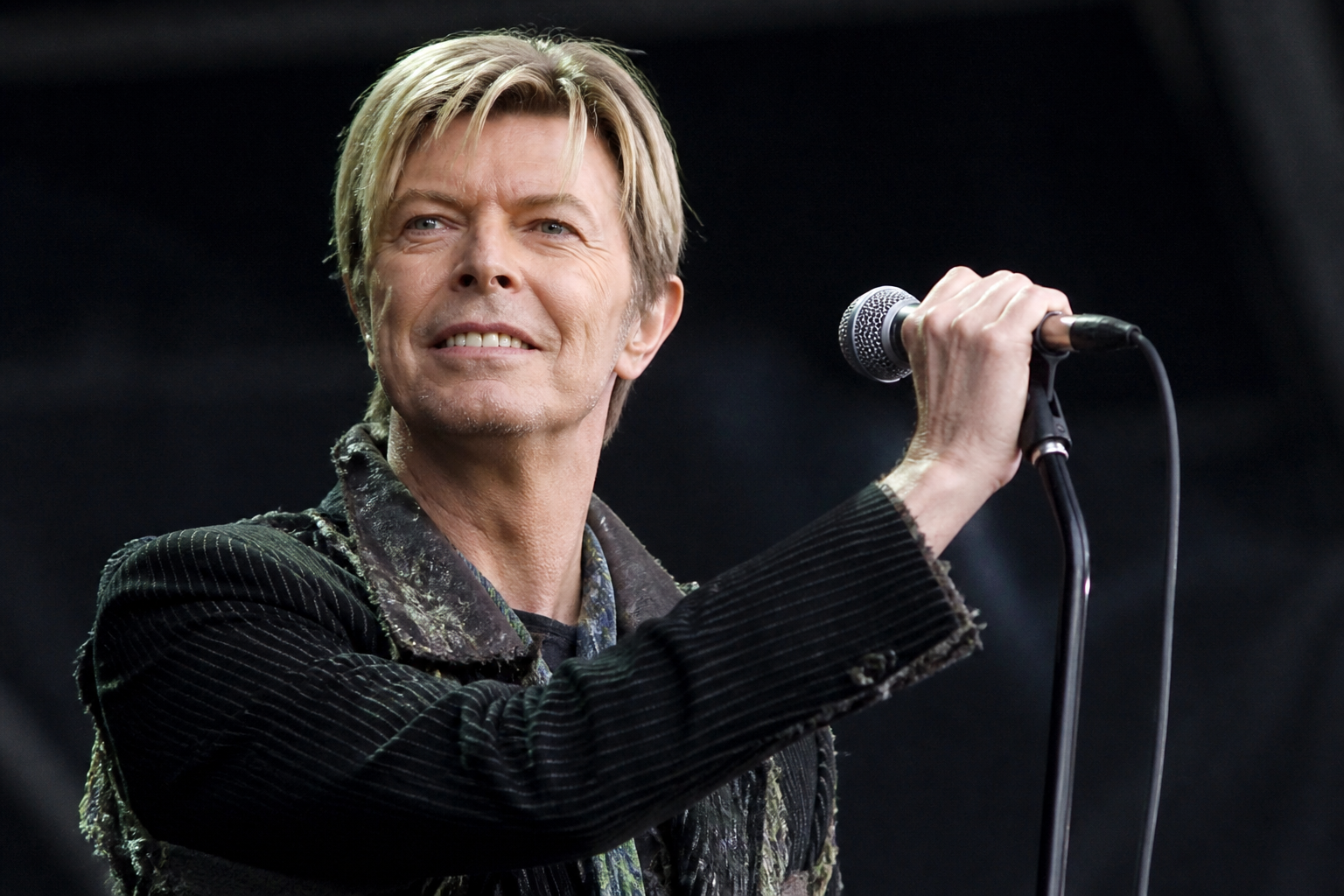
David Bowie made reinvention part of his artistic identity, and popular music has never quite looked the same. Across five decades, he treated image, sound, and performance as connected pieces of one creative vision. That approach made him one of the clearest examples of how a single artist could reshape an era without staying in one place for long.
Comments 0