What the New Research Found
The study suggests that babies are born with a natural cognitive ability that helps them make sense of the world almost immediately after birth.
While adults may assume newborns are simply reacting to light, sound, and touch, the research indicates infants may be capable of far more sophisticated mental processing than previously believed—especially in how they detect patterns, interpret information, and respond to their surroundings.
In other words, babies aren’t just passive observers.
They may already be active learners from day one.
Why This Discovery Is So Surprising
The idea that babies are born with an advanced ability challenges older theories of development that suggested intelligence and reasoning slowly emerge over time.
Instead, the new findings support a different model: the human brain may arrive pre-programmed with powerful tools that help infants:
-
identify meaningful information
-
adapt quickly
-
learn language faster
-
connect emotionally with caregivers
-
build survival skills immediately
That may be part of why humans, despite being born physically helpless, still thrive as a species.
The Remarkable Ability: Babies May Be Natural Pattern Detectors
One of the most important interpretations of this research is that newborns may have an inborn ability to recognize patterns—something essential for survival.
Pattern detection is a core cognitive skill. It helps humans learn:
-
language structure
-
cause-and-effect relationships
-
facial recognition
-
social cues
-
emotional tone
-
routines and safety signals
For adults, pattern recognition feels automatic. But if babies are born with it, it means the brain is equipped for learning long before conscious memory forms.

How Researchers Studied Babies’ Abilities
Studying newborn brains isn’t easy. Babies can’t explain what they’re thinking or take written tests.
Instead, scientists use clever experimental methods, such as:
-
measuring eye movement and gaze duration
-
tracking attention patterns
-
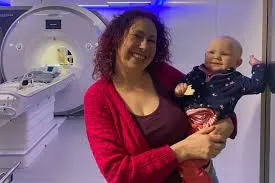
monitoring brain activity through safe imaging tools
-
analyzing changes in heart rate
-
observing reactions to repeated stimuli
These subtle responses can reveal what a baby recognizes, expects, or predicts.
And in many cases, babies show evidence of processing information in ways that suggest real cognitive reasoning—not random reactions.
What This Means for Early Childhood Development
If babies are born with strong learning abilities, it could reshape how we approach early childhood development.
It suggests that:
-
the first weeks of life are more mentally active than assumed
-
babies may be forming mental models of their environment immediately
-
early interactions may have deeper long-term effects
This supports what many pediatric experts already emphasize: early bonding and stimulation are not “optional extras”—they’re foundational.

Why This Ability May Be an Evolutionary Advantage
Humans are unusual among mammals.
Many animals can walk within hours of birth. Humans can’t even hold their heads up. Yet human intelligence becomes unmatched.
Researchers believe the trade-off may be this:
Humans are born physically helpless, but mentally prepared.
If newborns have built-in cognitive abilities like pattern recognition, prediction, or early reasoning, it would explain how they rapidly absorb:
-
language
-
social rules
-
emotional signals
-
environmental safety cues
In evolutionary terms, this is huge. It means survival depends less on instinctual movement and more on fast learning.
Babies Might Be “Wired” for Social Connection
Another fascinating implication is that babies may be born with cognitive tools that help them form social bonds.
From the first days of life, infants appear to respond strongly to:
-
faces
-
voices
-
emotional tone
-
eye contact
-
rhythm and speech patterns
This may not just be emotional—it may be a survival mechanism.
Babies who can quickly recognize their caregiver and interpret cues are more likely to be fed, protected, and soothed.
So the “remarkable ability” might not only be about intelligence—it may be about connection.
How This Changes What We Think About Learning
Traditionally, people assumed learning begins after birth through experience.
But if babies arrive with powerful built-in cognitive frameworks, learning may be more like:
-
“activating existing systems”
rather than -
“building intelligence from nothing”
This could mean the brain is already prepared to:
-
organize information
-
categorize objects
-
predict outcomes
-
detect what matters most
Experience still shapes development—but the foundation may be far stronger than previously assumed.
What Parents Can Take Away From This Research
Parents often underestimate how much babies understand.
This research offers a powerful reminder: newborns are absorbing far more than we think.
Even in the first months, babies may be learning from:
-
your facial expressions
-
your tone of voice
-
routines in the home
-
music and rhythm
-
emotional atmosphere
-
repeated patterns in daily life
That means small moments matter.
Talking to your baby, making eye contact, and creating predictable routines aren’t just comforting—they may be fueling brain development.
How This Could Influence Parenting Advice
If babies have advanced abilities from birth, parenting guidance may continue shifting toward early engagement.
Experts already recommend:
-
speaking to babies frequently
-
reading aloud
-
using expressive facial cues
-
responding quickly to cries
-
maintaining consistent routines
This research reinforces the idea that newborn brains are not idle—they’re building their understanding of the world at lightning speed.
The Role of Environment: Nature Meets Nurture
Even if babies are born with remarkable built-in abilities, environment still plays a massive role.
Think of it like a powerful computer.
The baby’s brain may come with impressive hardware—but the “software” is shaped by daily experiences.
That’s why early childhood environments can influence:
-
language development
-
emotional regulation
-
attention span
-
social confidence
-
stress response systems
The brain is ready, but it needs input.
What Scientists Still Don’t Know
While the findings are exciting, they also open up major questions:
-
How universal is this ability across different cultures and environments?
-
Does it vary between infants?
-
How early does it appear—before birth, or at birth?
-
How does this ability develop over time?
-
Can it predict intelligence or learning challenges later in life?
Scientists emphasize that infant research is still evolving, and each discovery often leads to even bigger mysteries.
Why This Study Matters Beyond Babies
This research isn’t only about parenting.
It matters because it helps answer one of the biggest questions in human science:
<strong>What makes the human mind so powerful?</strong>
Understanding what babies are born with could reshape fields like:
-
neuroscience
-
psychology
-
education
-
artificial intelligence
-
speech and language therapy
-
developmental medicine
If we can understand how learning begins, we can better understand how thinking works.
And that has implications far beyond infancy.
Could This Inspire Better AI Models?
Interestingly, some experts believe studying infant cognition could help improve artificial intelligence.
AI models today learn through massive data input. But babies learn faster and with far less information.
If babies are born with cognitive frameworks that make learning efficient, researchers may someday model AI systems after those principles—creating machines that learn like humans instead of like servers.
The baby brain might be the ultimate blueprint.
Final Thoughts: Babies Are More Incredible Than We Imagined
Newborns may look fragile, sleepy, and unaware—but research is increasingly proving that beneath the surface, their brains are working harder than we ever realized.
This study suggests babies are not blank slates.
They may enter the world already equipped with remarkable mental abilities—tools designed for learning, connection, and survival.
And while parents may still be exhausted, overwhelmed, and surviving on two hours of sleep, there’s something comforting in this discovery:
Even in their tiniest moments, babies are already doing something extraordinary.
The Surprising Way People in Your Life Could Be Making You Age Faster, According to Science

The Surprising Way People in Your Life Could Be Making You Age Faster, According to Science
Most people know that poor diet, lack of sleep, and chronic stress can accelerate aging. But emerging research suggests another surprising factor may be quietly influencing how quickly your body ages: the difficult people in your life.




Comments 0