Artificial intelligence is no longer just powering chatbots and productivity tools. It’s becoming a pillar of national security.
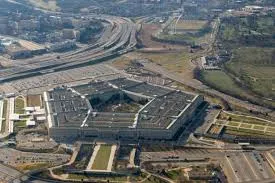
Two of the most prominent AI companies in the world — OpenAI and Anthropic — are now deepening their relationships with the United States Department of Defense, signaling a pivotal moment in the intersection of Silicon Valley and the Pentagon.
The collaboration highlights how generative AI is rapidly moving from commercial experimentation to government infrastructure — and potentially, defense strategy.

AI and the Pentagon: A New Phase of Cooperation
For years, tech companies hesitated to work directly with the military. Controversies around surveillance, autonomous weapons, and data privacy created tension between Silicon Valley employees and defense contracts.
Now, the landscape looks very different.
The Department of Defense has made it clear: artificial intelligence is essential to maintaining U.S. military and technological leadership. And AI companies are increasingly willing to participate.
OpenAI and Anthropic are reportedly engaging in discussions and partnerships that could expand how AI tools are used across defense operations — from logistics and cybersecurity to intelligence analysis.
This isn’t about replacing soldiers with robots. It’s about information advantage.
Why the Department of Defense Wants Advanced AI
Modern warfare is as much about data as it is about weapons.
The Pentagon handles vast amounts of information daily:
-
Satellite imagery
-
Communications data
-
Logistics planning
-
Threat detection
-
Cybersecurity monitoring
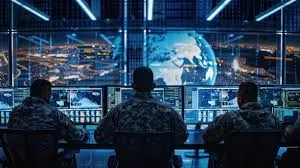
Advanced AI systems can analyze these streams faster than human teams alone.
By leveraging cutting-edge large language models and multimodal AI tools, the DoD aims to:
-
Accelerate decision-making
-
Improve operational efficiency
-
Strengthen cybersecurity defenses
-
Enhance intelligence synthesis
In short, AI offers the potential to compress response time in high-stakes scenarios.
OpenAI’s Evolving Government Strategy
OpenAI’s relationship with government agencies has evolved significantly.
Initially known primarily for consumer-facing AI products, the company has increasingly positioned itself as a provider of enterprise-grade and government-ready systems.
Collaborating with the Department of Defense represents a major strategic shift. It signals that OpenAI is prepared to engage in national security contexts — carefully, but deliberately.
This also reflects a broader maturation of the company. As generative AI becomes infrastructure-level technology, government adoption becomes almost inevitable.
Yet OpenAI faces a delicate balance:
-
Maintaining ethical guardrails
-
Avoiding misuse
-
Supporting democratic institutions
Its involvement in defense initiatives could define how the public perceives its long-term mission.
Anthropic’s Safety-First Philosophy Meets Defense
Anthropic has built its brand around AI safety and alignment.
Led by CEO Dario Amodei, the company emphasizes controlled deployment and responsible AI development.
Working with the Department of Defense may appear, at first glance, at odds with that mission.
But proponents argue the opposite.
If AI will inevitably be used in defense contexts, then companies committed to safety principles should help shape how that use occurs.
From that perspective, Anthropic’s involvement could bring stronger oversight and ethical design into military applications.
Still, the optics are complex.
The Political Context: National Security and AI Competition
Artificial intelligence has become a geopolitical issue.
U.S. policymakers increasingly view AI leadership as a strategic necessity, particularly in competition with global rivals.
Figures such as Pete Hegseth and other political voices have framed AI development as part of broader national security debates.
The underlying argument is clear:
Whoever leads in AI leads in influence.
That sentiment fuels urgency within the Department of Defense to partner with domestic AI leaders rather than rely on foreign technology ecosystems.
How AI Could Be Used in Defense Settings
It’s important to clarify what AI partnerships typically involve.
Most defense-related AI applications focus on:
1. Intelligence Analysis
Large language models can summarize complex reports, identify patterns, and surface anomalies in massive datasets.
2. Cybersecurity
AI systems can detect suspicious network activity, automate threat classification, and respond to vulnerabilities.
3. Logistics Optimization
Supply chain coordination for military operations is incredibly complex. AI can streamline resource allocation and predict shortages.
4. Administrative Efficiency
From document management to internal communications, generative AI can reduce administrative workload.
None of these applications necessarily involve autonomous weapons.
However, critics warn that the boundary between support systems and operational systems can blur.
Employee and Public Concerns
Past tech-military partnerships have triggered employee protests.
At various points, tech workers across the industry expressed concern about contributing to military AI programs.
Common concerns include:
-
Autonomous weaponization
-
Civil liberties implications
-
Lack of transparency
-
Escalation risks
OpenAI and Anthropic will likely face scrutiny not only from policymakers but also from their own employees and user communities.
How they communicate the scope and limits of their defense work may shape internal morale and public trust.
Ethical Guardrails and Transparency
Both OpenAI and Anthropic have published principles outlining how their models should be used.
These include restrictions on harmful applications and safeguards against misuse.
When working with government agencies, maintaining these guardrails becomes especially important.
Key questions include:
-
Will models be customized for defense-specific purposes?
-
How will oversight be implemented?
-
What transparency mechanisms will exist?
Clear boundaries will likely be essential to prevent reputational risk.

The Business Implications
Government contracts can be substantial and stable revenue sources.
Defense partnerships often provide:
-
Long-term funding
-
Research collaboration opportunities
-
Infrastructure investment
For AI companies operating in an intensely competitive market, diversification beyond consumer subscriptions and enterprise SaaS may be strategically attractive.
At the same time, association with defense work may affect global partnerships — particularly in regions sensitive to U.S. military influence.
The Broader Defense Tech Renaissance
The Pentagon’s engagement with AI companies is part of a broader defense tech revival.
Startups focused on autonomy, space technology, and cybersecurity are increasingly collaborating with the military.
Silicon Valley’s historical reluctance toward defense work appears to be softening, replaced by a narrative that frames technology leadership as civic responsibility.
This cultural shift marks a significant change from the tech industry’s stance just a few years ago.
Geopolitical Stakes and Global AI Governance
AI development does not occur in isolation.
Global powers are investing heavily in military AI capabilities.
The U.S. government’s partnerships with OpenAI and Anthropic may be partly motivated by concerns that lagging behind could weaken strategic positioning.
However, AI governance remains fragmented internationally.
Without coordinated global norms, rapid military AI development could increase tension between nations.
That’s why some experts argue that cooperation between AI companies and democratic governments must also include strong commitments to transparency and ethical standards.
A Turning Point for AI Companies
For OpenAI and Anthropic, collaboration with the Department of Defense represents more than a contract.
It signals a new phase in their evolution.
They are no longer simply startups building powerful models. They are infrastructure providers operating at national scale.
That shift comes with responsibilities that extend beyond product performance.
It includes:
-
Policy engagement
-
Ethical accountability
-
Strategic positioning
The decisions made now could define how AI is integrated into government systems for decades.
What Comes Next?
Several key developments will determine the impact of these partnerships:
-
Clear public disclosure of the scope of AI use
-
Robust oversight mechanisms
-
Continued dialogue with civil society
-
Alignment between corporate AI principles and government applications
If managed carefully, AI collaboration could enhance efficiency and security without crossing ethical lines.
If mismanaged, it could intensify debate around militarization and corporate responsibility.
Final Thoughts: The AI-Defense Era Has Arrived
Artificial intelligence is no longer confined to research labs or consumer apps.
It is becoming embedded in national infrastructure — including defense.
OpenAI and Anthropic stepping into deeper cooperation with the Department of Defense marks a defining moment in that transition.
The implications are vast:
-
For national security
-
For corporate ethics
-
For global stability
-
For the future of AI governance
As AI continues reshaping industries and institutions, one thing is clear:
The conversation about artificial intelligence and military power is just beginning — and it will shape the next chapter of technological history.
A Big Shift on Wall Street? The SEC Is Considering Ending Quarterly Earnings Reports

A Big Shift on Wall Street? The SEC Is Considering Ending Quarterly Earnings Reports
For decades, quarterly earnings reports have been a cornerstone of the American financial system.
Every three months, publicly traded companies release detailed financial statements that give investors insight into performance, growth, and future expectations.




Comments 0