Space Force's Revolutionary 'Orbital Aircraft Carrier' Could Transform Military Space Operations
The United States Space Force is embarking on one of the most ambitious military space projects in recent history - an orbital aircraft carrier capable of deploying smaller spacecraft on demand from orbit. This revolutionary concept, developed in partnership with space engineering company Gravitics, represents a fundamental shift in how America approaches space defense and could provide unprecedented tactical flexibility in what military planners increasingly view as a contested domain.
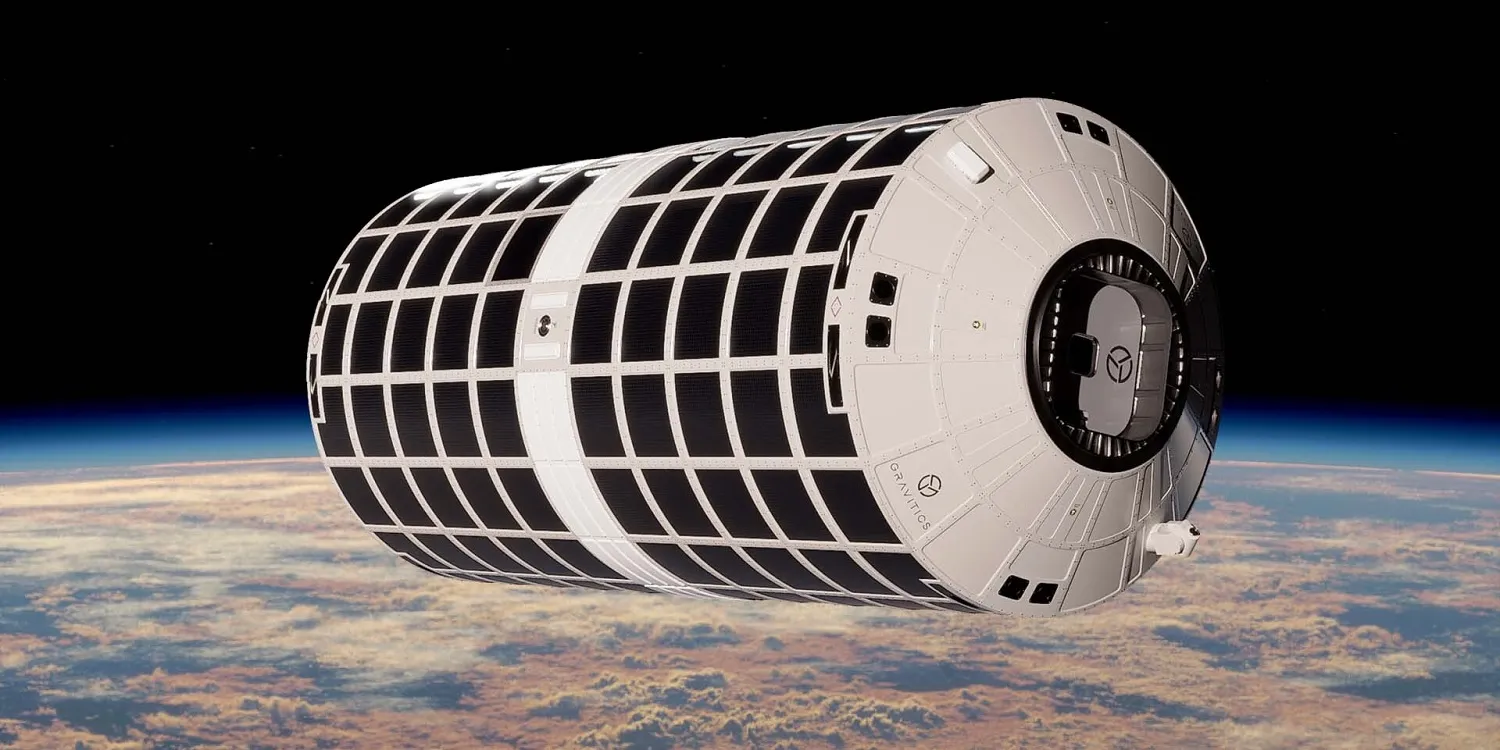
The project, funded through a $60 million investment from SpaceWERX's Strategic Funding Increase program, aims to create a platform that essentially serves as a launching pad positioned in space itself. Rather than relying solely on traditional ground-based launches that can take days or weeks to organize, the orbital carrier would pre-position multiple maneuverable vehicles in orbit, ready to respond rapidly when threats emerge or missions require immediate attention.
This development comes at a critical moment in the militarization of space, as nations around the world particularly China and Russia accelerate their own space programs and demonstrate increasingly sophisticated capabilities. The orbital carrier represents America's answer to these emerging challenges, offering a capability that no other nation currently possesses and that could fundamentally alter the strategic calculus of space operations.
Understanding the Orbital Carrier Concept
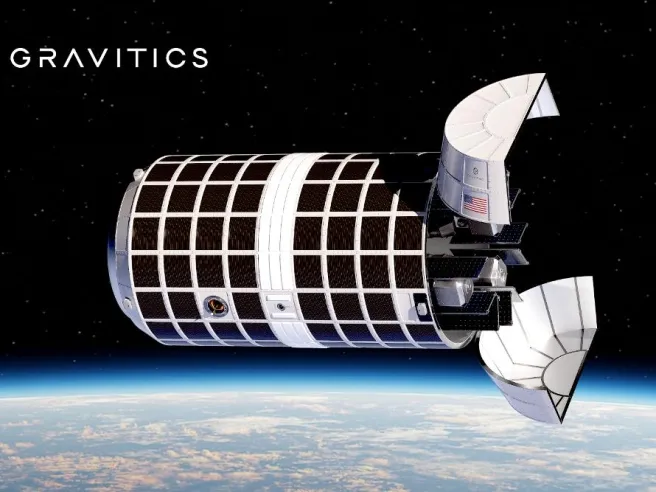
At its core, the orbital carrier is designed to function as a mothership in space, carrying multiple smaller craft that can be deployed when needed. Think of it as a naval aircraft carrier translated into the space domain a mobile platform that extends a nation's reach and provides flexibility to respond to dynamic situations.
The concept designs released by Gravitics show a satellite-like structure that opens in orbit, allowing smaller vehicles to exit and maneuver independently. These secondary craft could serve various purposes, from inspecting potentially hostile satellites to defending American space assets from attack, conducting surveillance operations, or even performing rescue missions for damaged spacecraft.
What makes this concept particularly revolutionary is its ability to bypass traditional launch constraints. Launching anything into space from Earth requires enormous amounts of energy, careful planning, and favorable weather conditions. The process can take days or weeks from decision to deployment. An orbital carrier stationed in space eliminates many of these limitations, enabling what the Space Force calls "tactically responsive space operations."
The carrier would essentially create a forward operating base in orbit, much like how the United States maintains military installations around the world to enable rapid response to emerging situations. Instead of starting every mission from Earth's surface, operators could activate pre-positioned assets already in space, dramatically reducing response times from weeks to potentially hours or even minutes.
This capability becomes even more significant when considering the distances and orbital mechanics involved in space operations. Moving between different orbital planes or altitudes requires precise timing and substantial energy expenditure. Having assets already positioned in orbit provides flexibility that ground-based systems simply cannot match, allowing operators to respond to threats or opportunities across a much wider range of orbital locations.
The $60 Million Investment and STRATFI Program
The funding for this groundbreaking project comes through SpaceWERX's STRATFI program, which represents an innovative approach to military technology development. STRATFI—Strategic Funding Increase combines government funding with private sector investment and Small Business Innovation Research dollars to accelerate the development of critical technologies.
The up to $60 million investment announced by Gravitics in March 2025 marks a significant commitment to bringing the orbital carrier from concept to reality. This funding model reflects a broader shift in how the Department of Defense approaches innovation, recognizing that the most cutting-edge capabilities often emerge from partnerships with commercial companies rather than traditional defense contractors alone.
SpaceWERX, the innovation arm of the Space Force, has specifically focused on identifying technologies that could provide decisive advantages in space operations. The orbital carrier fits squarely within this mission, offering a capability that could fundamentally change how America operates in space while potentially deterring adversaries from aggressive actions that might threaten U.S. space assets.
The investment timeline and specific milestones have not been publicly detailed, reflecting the sensitive nature of military space programs. However, the announcement of the partnership and funding suggests that the project has moved beyond purely conceptual stages and into active development. Industry observers expect to see initial demonstrations or prototypes within the coming years, though the path to full operational capability will likely take considerably longer.
The dollar amount, while substantial, represents a relatively modest investment compared to many traditional defense programs. This reflects both the leveraging of commercial space technology and infrastructure, and the Space Force's emphasis on rapid development and fielding of capabilities rather than decades-long acquisition programs. By partnering with an innovative commercial company, the Space Force aims to achieve breakthrough capabilities faster and more cost-effectively than traditional procurement approaches would allow.
Strategic Implications for Space Defense
The development of an orbital carrier carries profound implications for American space strategy and the broader geopolitical competition unfolding beyond Earth's atmosphere. Space has evolved from a largely peaceful domain used primarily for communication and observation into an increasingly contested and potentially weaponized environment.
China and Russia have both demonstrated capabilities that threaten American space assets. These include anti-satellite weapons, directed energy systems, and sophisticated maneuvering satellites that could interfere with or attack U.S. spacecraft. China in particular has invested heavily in space capabilities, viewing dominance in this domain as essential to its broader military modernization and great power ambitions.
The orbital carrier addresses these threats by providing the Space Force with enhanced defensive and offensive options. Smaller craft deployed from the carrier could inspect suspicious satellites, determine whether they pose threats, and potentially take action to protect critical American assets. This capability is essential because modern American military operations depend heavily on space-based systems for communication, navigation, intelligence gathering, and precision weapon guidance.
Perhaps more importantly, the mere existence of such a capability provides deterrent value. Potential adversaries would need to account for the possibility that any aggressive action against American space assets could trigger a rapid response from pre-positioned forces they cannot easily track or predict. This uncertainty complicates adversary planning and may discourage attacks that might otherwise seem attractive.
The orbital carrier also supports the Space Force's broader mission of ensuring freedom of action in space. As more nations and commercial entities operate in orbit, the potential for accidents, interference, or deliberate hostile acts increases. Having the ability to rapidly respond to incidents provides the United States with options short of war while demonstrating commitment to protecting its interests and those of its allies.
From a practical standpoint, the carrier enhances situational awareness and intelligence gathering. The smaller craft it deploys could conduct close-up inspections of foreign satellites, gathering information about their capabilities and purposes that cannot be obtained through ground-based observation. This intelligence supports strategic decision-making and helps policymakers understand the evolving threat environment.
Technical Challenges and Innovation Required
Developing an operational orbital carrier presents numerous technical challenges that Gravitics and the Space Force must overcome. While the concept is compelling, translating it into a functional system requires solving problems that have never been addressed before at this scale.
One fundamental challenge involves the carrier's ability to house, maintain, and deploy multiple smaller spacecraft in the harsh environment of space. Unlike naval carriers operating in the relatively benign conditions of Earth's atmosphere and oceans, orbital platforms face extreme temperature variations, radiation exposure, micrometeorite impacts, and the vacuum of space itself. Every mechanical system must function reliably despite these conditions, with no possibility of maintenance visits once deployed.
The smaller craft themselves must be designed to remain dormant for extended periods while maintaining readiness for immediate activation. This requires robust power systems, reliable propulsion, and durable structures that can withstand the space environment without degradation. The vehicles must also be capable of autonomous or semi-autonomous operation, as communication delays and bandwidth limitations make direct human control impractical for many missions.
Deployment mechanisms represent another significant engineering challenge. The carrier must reliably release craft in various directions and trajectories without imparting unwanted rotations or velocities that would complicate subsequent operations. The system must work repeatedly and reliably, as failures in space are difficult or impossible to repair.
Power generation and management become critical concerns for any large orbital platform. The carrier will likely rely on solar panels for electricity, but these must be sized to support not just the carrier's own systems but also charging the smaller craft and managing their power needs while docked. Battery systems must provide power during eclipses when solar generation is unavailable.
Communication systems must enable the carrier to stay in contact with ground controllers while also coordinating with deployed craft. This requires sophisticated antennas and signal processing capabilities that can maintain multiple communication links simultaneously across various frequencies and protocols. The carrier must also incorporate substantial computing power to manage operations, coordinate deployments, and process data from various sensors and subsystems.
Orbital mechanics add another layer of complexity. The carrier's position determines what portions of space and Earth it can access and observe. Choosing the optimal orbit involves balancing numerous factors including coverage area, radiation environment, debris hazards, and fuel requirements for station-keeping. The deployed craft must have sufficient propulsion to reach their intended operational areas and return to the carrier if necessary.
Space Force's Broader Mission and Context
The orbital carrier project fits within the Space Force's larger mission of defending American interests in space and ensuring the nation maintains its advantage in this increasingly critical domain. Created as a separate service branch in 2019 under President Donald Trump, the Space Force consolidated various military space functions previously scattered across other service branches.
The Space Force operates under the principle that space is a warfighting domain requiring dedicated focus, specialized expertise, and persistent attention. The service's approximately 8,600 personnel called Guardians work to secure American interests in space, from space, and to space, as the service's mission statement indicates.
This mission has grown increasingly urgent as potential adversaries develop anti-satellite weapons, electronic warfare capabilities targeting space systems, and their own advanced satellites that could threaten American assets. The Space Force must prepare for scenarios ranging from peacetime competition to potential conflict, ensuring that American forces can continue operating effectively even if space systems come under attack.
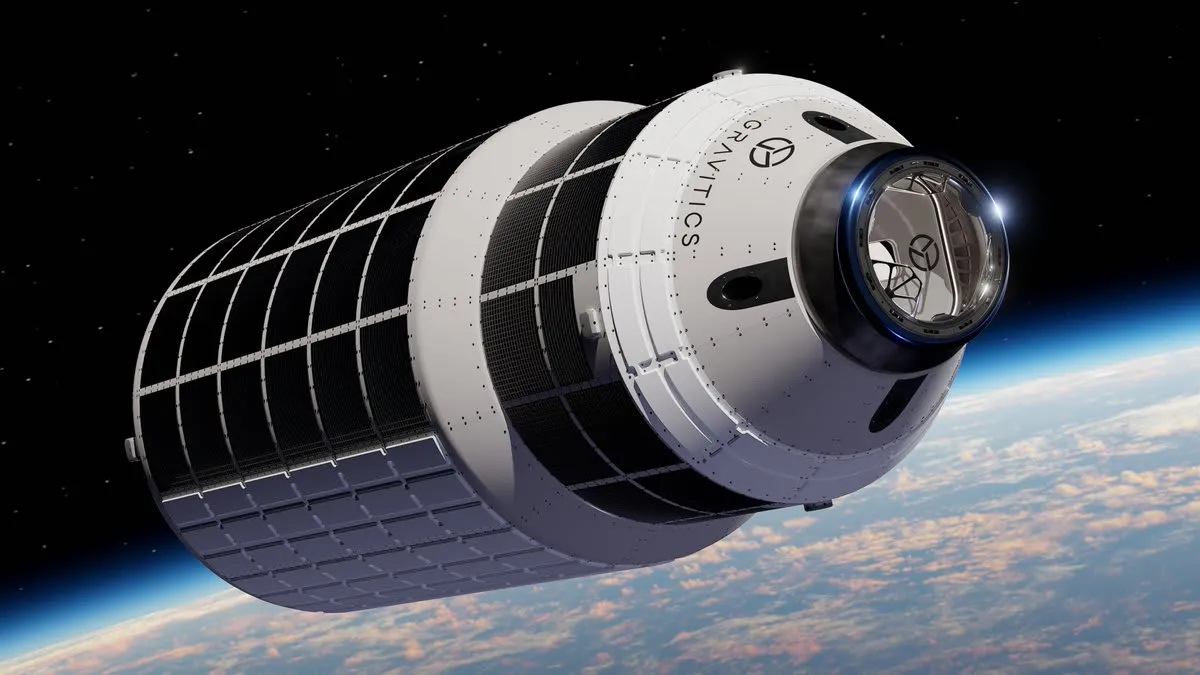
The orbital carrier represents one element of a broader transformation aimed at making the Space Force a true warfighting service rather than simply a support organization. Other initiatives include developing better space domain awareness capabilities, hardening satellites against attack, creating redundant systems that can continue functioning despite losses, and establishing the doctrine and tactics for space operations.
As a Space Force spokesperson emphasized, the service works to maintain America's leadership in space through accelerating transformation, developing Guardians' skills, and strengthening partnerships with joint military forces, international allies, and commercial entities. The orbital carrier exemplifies this approach by pushing technological boundaries while leveraging commercial innovation and creating capabilities that provide real operational advantages.
What Comes Next and Timeline Considerations
While the announcement of the Gravitics partnership and funding marks a significant milestone, substantial work remains before an operational orbital carrier becomes reality. The project faces technical, programmatic, and operational hurdles that will take years to overcome.
Initial development phases will likely focus on demonstrating key technologies and validating the fundamental concept. This could include ground testing of deployment mechanisms, thermal and structural testing of components, and potentially sub-orbital or orbital demonstrations of critical subsystems. Each of these steps helps reduce risk and builds confidence that the full system will function as intended.
Following successful technology demonstrations, the program would likely move toward building and launching a prototype or demonstration carrier. This initial version might have limited capabilities compared to the ultimate operational system, but it would prove the concept works in the actual space environment and provide valuable lessons for refining the design.
An exact timeline for operational deployment has not been publicly released, reflecting both the classified nature of the program and the inherent uncertainties in developing revolutionary capabilities. However, based on typical space system development timelines and the emphasis on rapid fielding, observers might reasonably expect initial operational capability within five to ten years, assuming the program proceeds smoothly.
The path from concept to operational system will also require addressing policy and doctrinal questions about how the orbital carrier should be employed. The Space Force must develop tactics, techniques, and procedures for operating the system, train personnel to manage it effectively, and integrate it with other space and terrestrial military capabilities. These organizational and doctrinal challenges often prove as complex as the technical hurdles.
International considerations will also influence how the program proceeds. The orbital carrier could raise questions about space weapons treaties and arms control agreements, though the United States maintains that defensive capabilities in space are legitimate and necessary. Diplomatic challenges may arise as other nations question American intentions or seek to develop similar capabilities themselves.
Budget realities will also shape the program's trajectory. While the initial $60 million investment is substantial, bringing the orbital carrier to full operational status will likely require additional funding over multiple years. The Space Force must compete for resources with other military priorities, and sustaining support through changing administrations and Congressional sessions requires demonstrating value and progress.
A Big Shift on Wall Street? The SEC Is Considering Ending Quarterly Earnings Reports

A Big Shift on Wall Street? The SEC Is Considering Ending Quarterly Earnings Reports
For decades, quarterly earnings reports have been a cornerstone of the American financial system.
Every three months, publicly traded companies release detailed financial statements that give investors insight into performance, growth, and future expectations.




Comments 0