One of the most unusual episodes in Elvis Presley’s late life began with a handwritten letter to President Richard Nixon and ended with a federal badge that has been retold, exaggerated, and sometimes misunderstood ever since. Elvis wanted a narcotics-related credential from the federal government. He believed it would let him support the anti-drug effort and give official weight to views he already held about drugs, law enforcement, and public order.
What makes the story so enduring is not that Elvis secretly became a drug agent. He did not. The more interesting truth is narrower and stranger: he used a White House meeting to ask for recognition from the federal narcotics world, and he was eventually given a limited credential that signaled affiliation and access, not full law-enforcement authority. That distinction matters, because it changes the story from a myth about a celebrity cop into a more revealing look at how Elvis thought about status, authority, and service.
The episode also sits at the intersection of several larger forces in the early 1970s: rising public concern about drugs, the growing visibility of federal enforcement, and Elvis’s own fascination with badges, uniforms, and official identification. He had long been drawn to law enforcement culture. When those interests met his anti-drug convictions, the result was a request that was both deeply personal and historically odd.
Elvis and the appeal of authority
Elvis Presley’s attraction to police culture was not a one-time eccentricity. Over the years, he showed a repeated interest in badges, official-looking identification, and the symbolic power of law enforcement.
Friends, associates, and biographers have often noted that he admired officers and liked the prestige attached to official credentials. For Elvis, a badge was more than metal or paper. It represented access, legitimacy, and a kind of public trust that fame alone could not provide.
That fascination also fit his broader personality. Elvis liked the feeling of moving through life with special access. He was a global celebrity, but he still seems to have been drawn to forms of recognition that came from institutions rather than applause. A badge, especially one connected to a federal agency, offered a different kind of status: not merely being famous, but being acknowledged by the state.
His interest in law enforcement also overlapped with his public image. Elvis often projected patriotism, discipline, and respect for order, even when his personal life was complicated. He liked the idea of being seen as a supporter of the people who enforced rules rather than the people who broke them. That mindset helps explain why a narcotics-related credential made sense to him in the first place.
He was not, however, seeking to become a conventional police officer. The record supports a more limited and more specific conclusion: Elvis wanted an official connection to the federal anti-drug effort. He appears to have believed that a badge or identification card from the government would let him participate in a meaningful way, while also satisfying his long-standing attraction to official status.
That combination of motives is important. It would be too simple to describe the request as pure vanity or pure civic concern. Elvis seems to have wanted both recognition and purpose. The badge appealed to him because it symbolized authority, but it also promised a role, however narrow, in a cause he believed mattered.
The anti-drug climate of the early 1970s
By the time Elvis made his request, drug use had become a major public issue in the United States. Politicians, parents, law-enforcement officials, and the press all treated narcotics as a serious national problem. The federal government was strengthening and reorganizing drug enforcement, and public discussion around drugs was intense. In that atmosphere, Elvis’s interest in the subject did not come from nowhere.
He had developed a strong dislike for narcotics and was reportedly alarmed by their influence on young people and the entertainment world. He did not view drugs as glamorous, and he seems to have wanted to align himself with the side of the issue that emphasized control, prevention, and enforcement. That stance made his approach to Nixon more than a celebrity curiosity. It was tied to a broader cultural panic and a very real federal policy environment.
Still, it is important not to overread the record. Elvis was not drafting drug policy or offering expert analysis. What the documentation supports is simpler: he wanted to be useful, and he thought a federal badge would help him do that. In his mind, official recognition could translate into practical anti-drug work or at least a more credible public role in it.

There was also an image component. Elvis had spent years balancing rebellion and respectability in the public imagination. A narcotics-related credential allowed him to stand for law and order while remaining Elvis Presley, the unmistakable cultural icon. It fit a version of himself that was at once patriotic, powerful, and morally serious.
That is one reason the episode has lasted so long in popular memory. It reveals how closely Elvis linked identity and symbolism. The request was not only about what he wanted to do. It was about how he wanted to be seen: not as a man on the outside making comments, but as someone with recognized standing inside the system.
The White House meeting with Richard Nixon
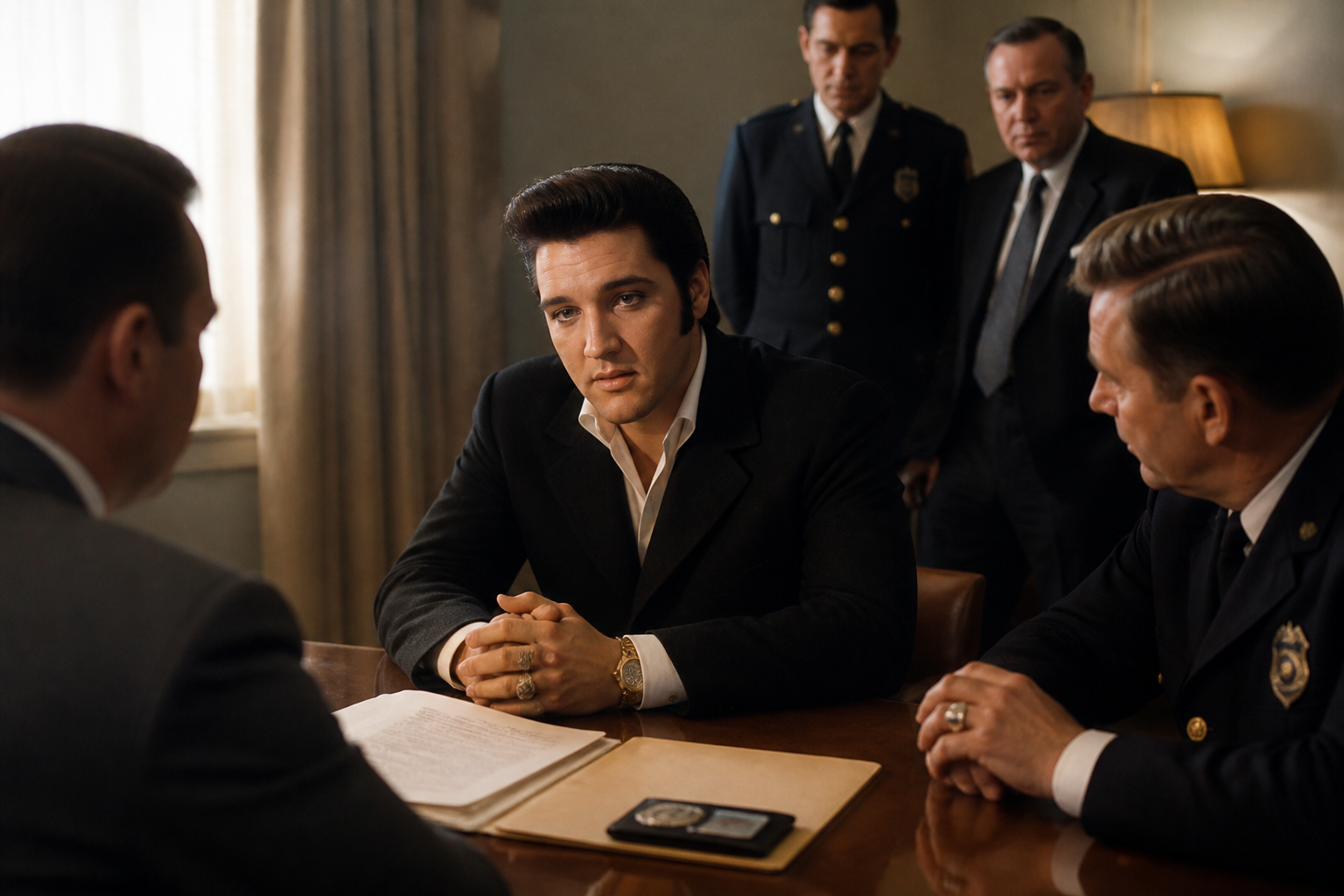
The best-known chapter of the story came in December 1970, when Elvis traveled to Washington, D.C., and sought an audience with President Richard Nixon. He arrived with a handwritten letter and a clear request. He wanted to discuss drugs and, crucially, to obtain a credential that would connect him to the federal anti-narcotics effort.
The meeting has become famous because of the contrast between the two men: one the president of the United States, the other the most recognizable entertainer in the world. But the real significance of the encounter lies in what Elvis asked for. He wanted official recognition related to narcotics enforcement. He hoped that federal standing would help him support the cause he cared about.
The White House visit itself was only part of the process. Elvis did not simply walk in and walk out with a badge in his pocket.
Instead, the episode moved through official channels. That detail matters because it shows that this was not just a spontaneous celebrity exchange. The request was recorded, considered, and handled as a real bureaucratic matter.
Elvis also framed his request in patriotic terms. He presented himself as someone who wanted to help the country, not merely someone seeking a souvenir. That posture matched the serious tone he used when discussing drugs. He saw the issue as a national concern and wanted his name attached to the response in a way that felt official.
At the same time, the meeting should not be romanticized into something it was not. Elvis was not recruited into a secret federal mission, and he was not being prepared for undercover work. The important story is not that he became an agent, but that he sought a federal credential and was given a limited form of recognition that he could carry as identification.
The federal agency behind the story
At the time, federal narcotics enforcement was handled by the Bureau of Narcotics and Dangerous Drugs, commonly called the BNDD. The agency was part of the expanding federal response to drug trafficking and drug abuse. If Elvis wanted a federal connection to narcotics work, the BNDD was the relevant institutional world.
That context helps clarify the request. Elvis was not asking for a local honorary plaque or a ceremonial key to a city.
He wanted an official tie to the federal narcotics apparatus, the part of government that dealt directly with drugs and enforcement. That made the request unusual, but not random. It was aimed at the actual agency then responsible for the issue.
The agency’s existence also helps explain why the request could be processed at all. In that period, the federal government was increasingly visible in drug enforcement, and celebrity involvement in public causes was becoming more common. Elvis’s fame made him an odd case, but not one outside the reach of federal paperwork.

Even so, the BNDD was not going to turn him into a sworn narcotics officer in the usual sense. Federal agencies issue different kinds of credentials, and those credentials mean different things. Some identify affiliation or allow limited access; others confer legal powers. Elvis’s case belongs in the first category, not the second.
That distinction is crucial because it prevents the story from drifting into folklore. The credential Elvis received was real, but it did not make him a standard law-enforcement agent with arrest powers and an investigative caseload. It was a symbol of recognition and access, not a full commission.
What the badge was and was not
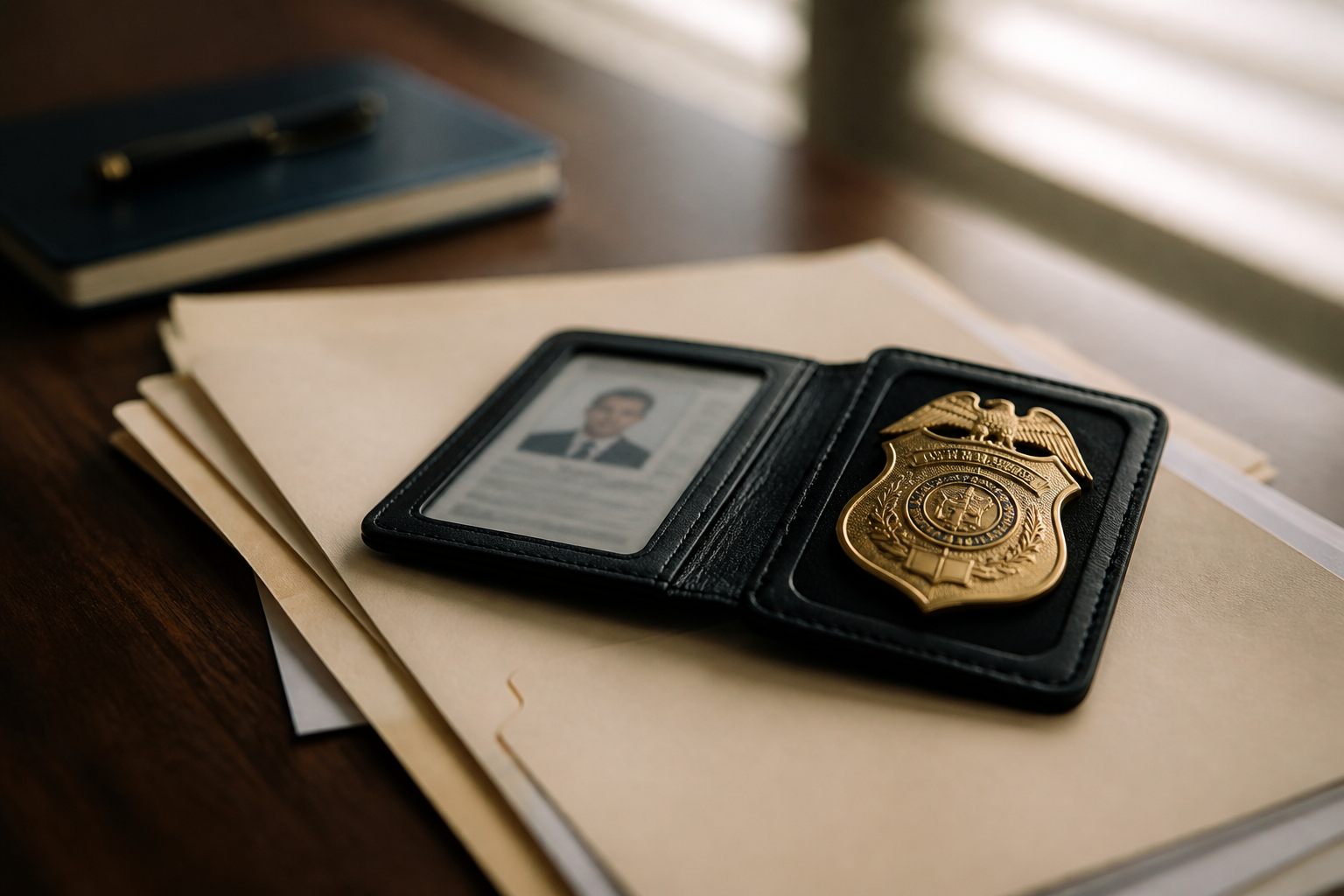
Elvis did ultimately receive a federal badge and identification connected to the anti-drug effort, but the wording around this has often been overstated in retellings. The safest and most accurate way to describe it is as a limited federal credential, not as proof that he became a sworn narcotics agent. The badge reflected contact with and recognition from the federal narcotics world; it did not give him the ordinary authority of a federal officer.
That difference may sound technical, but it is the heart of the matter. A badge can mean many things: identity, access, courtesy, affiliation, or authority. In Elvis’s case, it meant some of the first and none of the last in the fullest sense. He was given a credential that acknowledged his interest and allowed him to present himself as connected to the federal anti-drug effort, but it did not transform him into a law-enforcement professional.
So what could he do with it? He could identify himself in a federal context.
He could point to a real connection to the anti-drug cause. He could enjoy the status that came with being recognized by an agency he admired. What he could not do was act as a regular narcotics agent, conduct standard enforcement operations, or claim the powers of a sworn investigator.
This careful distinction matters because the story has often been retold as though Elvis had somehow joined the federal police. He had not. The more accurate picture is subtler and, in some ways, more interesting: a celebrity who wanted official standing in a public-policy arena received a credential that symbolized limited association rather than full authority.
That does not make the episode trivial. If anything, it makes it more revealing. Elvis was able to turn an intensely personal fascination into a federal acknowledgment. The government did not hand him operational power, but it did give him enough recognition to satisfy the symbolic purpose of the request.
Why Elvis wanted it
The motives behind Elvis’s request should be stated carefully. The record supports several reasonable conclusions, but not sweeping psychological certainty.
He clearly admired law enforcement, disliked drugs, and wanted to be seen as part of the anti-drug effort. He also liked official status. Those motives can coexist without one cancelling out the others.
It is tempting to turn the story into a single neat explanation: vanity, patriotism, insecurity, or a desire for access. But the evidence is better served by a more modest account.
Elvis likely wanted the badge because it matched his interests and beliefs. It made him feel connected to something serious and useful. It also gave him the kind of recognition he enjoyed.
There may have been practical considerations as well. A federal credential could offer a smoother path into certain places and conversations than a famous face alone.
But even there, it is better to avoid exaggeration. The badge did not make Elvis an undercover operative or a roaming federal authority. It gave him symbolic and limited practical benefits, not open-ended power.
Another way to understand the episode is through Elvis’s relationship to public image. He had spent much of his career being seen in contradictory ways: rebellious and wholesome, secular and spiritual, dangerous and patriotic. The narcotics badge fit neatly into that tension. It let him inhabit authority without surrendering his celebrity identity.
That is why the story has such staying power. It is not just an odd footnote.
It shows Elvis trying to connect himself to state power in a field that matched his moral concerns. He was not pretending to be a cop in a casual costume sense. He wanted a real, if limited, federal acknowledgment.
What historians should be careful not to claim
Because the episode is so colorful, it is easy for writers to push it beyond what the evidence supports. The biggest risk is blurring the difference between an honorary or visitor-style credential and actual law-enforcement authority. That distinction should remain clear. Elvis received a credential tied to the narcotics effort, but that is not the same thing as becoming a sworn federal narcotics agent.
Another risk is attributing motives too confidently. It is reasonable to say Elvis wanted recognition, liked badges, and opposed drugs. It is less secure to claim detailed inner motives that the record does not firmly establish. A careful article should stay close to what can be supported: his fascination with authority, his concern about drugs, and his desire for official standing.
The same caution applies to claims about access. Elvis may have believed the credential would open doors or help him participate in anti-drug work.
But that should be presented as a plausible interpretation, not an inflated certainty. The documented fact is that he got a limited credential. Anything beyond that requires restraint.
This is why the episode benefits from precision. The story is already extraordinary without embellishment.
Elvis Presley, the biggest star in America, sought federal narcotics recognition from the Nixon White House. That alone is remarkable. It becomes more credible—and more interesting—when told without collapsing symbolic affiliation into actual law-enforcement power.
The legacy of the badge story
Half a century later, Elvis’s narcotics badge episode still fascinates because it captures so many things at once: celebrity, bureaucracy, public morality, and the strange intimacy between fame and government. It shows that Elvis wanted more than applause. He wanted a form of institutional legitimacy that matched his self-image as a man of action.
It also reveals how seriously American institutions could take a famous person’s request when it came wrapped in patriotic language and a real public issue. Nixon’s White House was not dealing with a joke. It was dealing with a star who wanted to attach himself to the anti-drug effort in a visible, official way.
For fans, the story is memorable because it exposes a different side of Elvis: not just the performer, but the man who liked symbols of order and wanted to be associated with them. For historians, it is useful because it illustrates how celebrity status could intersect with federal procedure in unexpected ways.
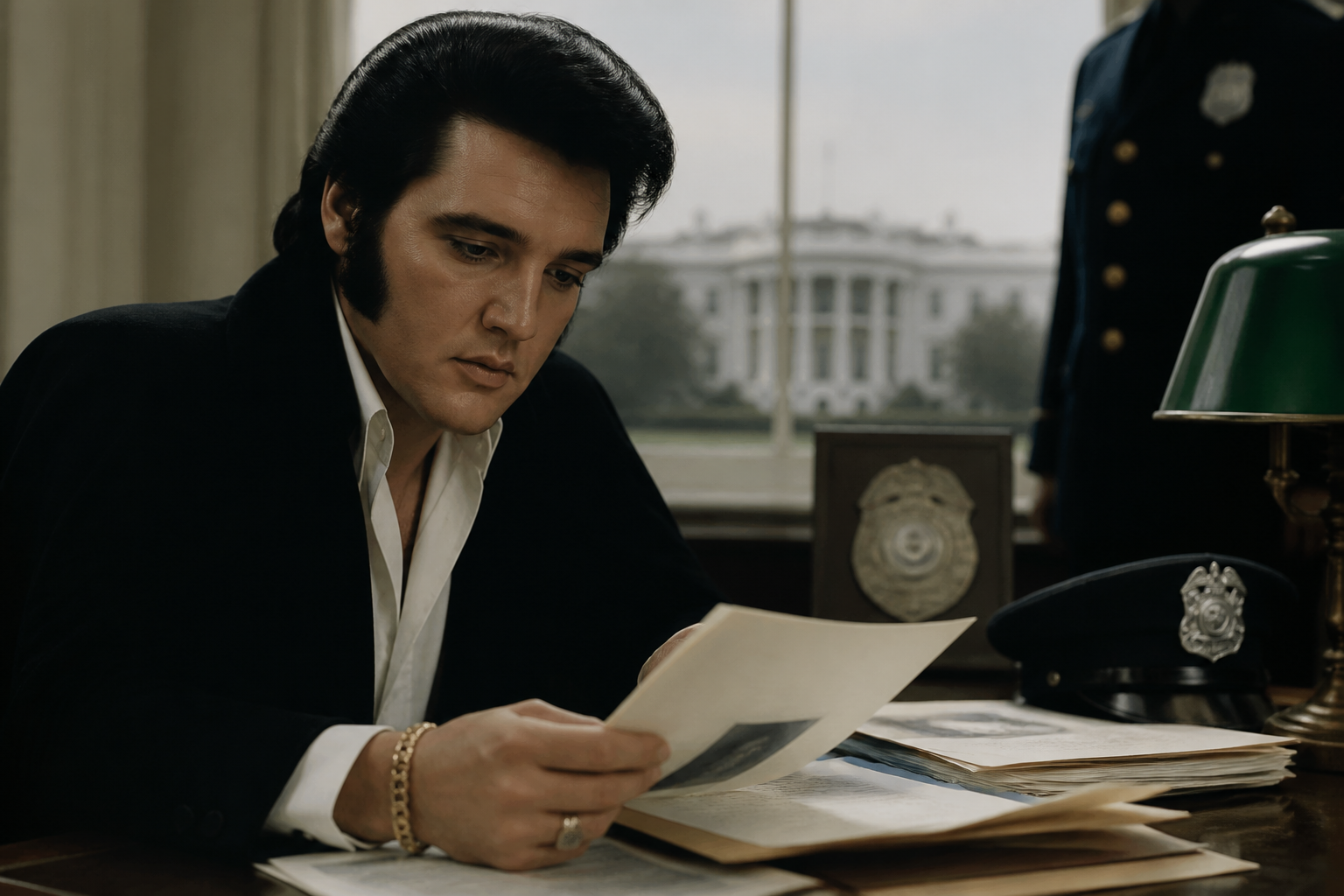
The episode also belongs to the broader history of drug politics in the early 1970s. That was a time when the federal government was intensifying its response to narcotics and when anti-drug messaging was becoming more prominent. Elvis’s request fits that environment. He was not inventing the issue; he was responding to a national moment in which drugs, authority, and public image were tightly linked.
In that sense, the badge is more than a curiosity. It is a small but revealing artifact of the era. It reflects the power of official symbols, the reach of celebrity, and the way Elvis tried to position himself inside a serious public cause.
Conclusion
Elvis Presley’s attempt to obtain federal narcotics credentials is one of the most unusual stories from his later life, but it is best understood with careful distinctions. He did seek a federal connection to the anti-drug effort.
He did meet Richard Nixon in pursuit of that aim. And he did receive a limited credential tied to the narcotics world. But he did not become a sworn narcotics agent, and the badge should not be treated as proof of ordinary law-enforcement authority.
The story remains compelling precisely because of that difference. It shows Elvis trying to turn his fascination with badges and authority into something officially recognized. It shows him taking the drug issue seriously enough to want a federal role, even if only a symbolic one. And it shows how his celebrity could intersect with government in ways that were both real and improbable.
In the end, the badge episode tells us as much about Elvis’s sense of identity as it does about the federal government. He wanted to be seen as useful, serious, and connected to power. The limited credential he received gave him a way to inhabit that identity, even if only on paper. That is why the story endures: not because Elvis became a narcotics cop, but because he tried to step into the world of official authority and, for a moment, the government let him.

Wife's Affair With Famous Athlete Exposed at Lake House | Story

CHAPTER 1: THE MAN WHO WANTED ME INSIDE
Lydia turned the tablet toward me.
On the screen was a photograph of my truck.
Not from tonight.
From three days earlier.
It had been taken outside my office in Naperville, where I usually parked beneath the security camera beside the rear entrance.
I stared at it.
“Why does Damon have a picture of my truck?”
Helena answered before Lydia could.
“Because your wife has been helping him prepare for your arrival.”
I looked toward the illuminated lake house.
Inside, Marissa was still laughing with Damon. She had no idea his wife was standing less than a hundred yards away.
“What are you talking about?”
Lydia swiped to another document.
It was a message from Damon to a man named Grant Ellis, the foundation's director of security.
If Hayes comes onto the property, make sure the cameras catch everything. Especially if he gets aggressive.
The message had been sent Wednesday morning.
Two days before Marissa supposedly left for Milwaukee.
I felt something cold settle in my stomach.
“They knew I'd follow her?”
“They were counting on it,” Helena said.
I looked at her.
“Why?”
She folded her arms.
“Because you refused to sign the certification report.”
For several seconds, nobody spoke.
The lake moved quietly behind us, reflecting the yellow lights from Damon's enormous house. Somewhere across the water, a boat engine started. Everything looked peaceful, almost beautiful.
Then Lydia showed me the next message.
This one came from Marissa.
He'll come if he thinks I'm with you. He won't be able to help himself.
I read it twice.
My wife hadn't simply lied about a weekend with friends.
She had apparently used the affair to draw me toward a confrontation.
Lydia continued.
“Damon needs your firm removed from the foundation's certification process. Your refusal to approve the project is holding up a development grant worth nearly twelve million dollars.”
“I know what the grant is worth.”
“Then you understand why he needs a different compliance reviewer.”
I did.
But removing my company wasn't simple.
Our agreement required documented cause for termination before the foundation could replace us without triggering a formal review. Damon couldn't simply fire me because I refused to overlook incomplete disclosures.
A professional misconduct allegation, however, could change that.
Especially one involving threats, trespassing or an attempted assault on a prominent former athlete.
I looked toward the house again.
“So he wanted me to walk in and lose my temper.”
“That's what the messages suggest,” Lydia said carefully.
Helena's expression didn't change.
“And Marissa agreed to help him.”
I wanted to deny it.
But I'd seen the message.
Lydia showed me a draft incident report.
My name appeared in the first paragraph.
The report described an angry husband entering Damon's private property, threatening him over an alleged affair and creating a security concern.
The date field was blank.
The incident hadn't happened.
Yet someone had already written it.
I looked at Helena.
“How did you get this?”
“Grant sent me copies.”
“Why would his security director do that?”
“Because Damon asked him to document something that hadn't happened. Grant wanted no part of it.”
Lydia clarified that the material had been provided to the foundation's legal counsel for review. Helena wasn't asking me to rely on a mysterious collection of stolen messages. She was showing me evidence that her attorney was already evaluating.
I exhaled slowly.
“What happens now?”
“We don't confront them,” Lydia said. “We don't enter the property. And you don't give Damon the incident he's expecting.”
I looked at the lake house.
Through the window, Damon leaned toward Marissa.
She smiled.
For a moment, the scene looked exactly like the betrayal I'd driven two hours to confirm.
But now I understood that the affair wasn't the entire story.
It was bait.
And I was supposed to be the angry husband who walked straight into the trap.
My phone vibrated.
A message from Marissa.
Why are you calling so much? You're embarrassing me.
I stared at the screen.
Then another message arrived.
I'm turning my phone off. Don't ruin my weekend.
Helena read my expression.
“She knows you're here.”
“How?”
Lydia pointed toward the private road.
“Damon's security cameras cover the entrance. Your vehicle was probably identified when you drove past.”
I felt foolish.
I'd believed I was following Marissa.
Instead, I'd followed a route someone had expected me to take.
“Should we leave?” I asked.
“Yes,” Lydia said. “Immediately.”
Helena looked toward the house one last time.
Then she said something I didn't understand until much later.
“Elliot, your wife may think Damon is offering her a future. But he has already prepared a version of tonight in which she becomes a problem too.”
I turned toward her.
“What does that mean?”
Helena's eyes remained on the window.
“It means you're not the only person he intends to sacrifice.”
CHAPTER 2: THE SECOND NAME ON THE REPORT
We met the following morning in a conference room at Lydia's law firm.
I hadn't slept.
I had spent most of the night replaying the same image.
Marissa in the black nightgown.
Damon's arm around her waist.
The smile she'd given him.
And the message saying I wouldn't be able to help myself.
At nine o'clock, Lydia placed several documents on the table.
Helena sat beside her.
A forensic accountant named Thomas Bell joined us by video.
He had been reviewing the foundation's transactions at Helena's request.
The first document was a summary of the consulting payments my firm had questioned.
More than one million dollars had moved through three companies connected to the proposed training complex.
Some payments had legitimate invoices.
Others had vague descriptions.
Strategic development.
Community outreach.
Project coordination.
The problem wasn't simply that the amounts were large.
The problem was that the supporting records didn't adequately establish what services had been delivered.
Thomas shared a spreadsheet.
“Your refusal to certify the project was justified based on the records available to your firm,” he said.
That should have made me feel relieved.
It didn't.
Because the next document contained Marissa's name.
She had approved the release of several preliminary vendor-review files from our office.
Those files were supposed to remain within our internal compliance system until the review was complete.
I stared at the authorization records.
“She had access to those files.”
“Yes,” Lydia said.
“She wasn't supposed to release them.”
“That's one of the questions your independent counsel will need to address.”
I looked at the dates.
The first release had occurred almost four months earlier.
That was around the time Marissa began mentioning Damon constantly.
At first, she described him as charming.
Then generous.
Then misunderstood.
She told me he was trying to build something meaningful for disadvantaged teenagers and that my refusal to approve the project was making us look unreasonable.
I remembered one argument particularly clearly.
“Do you have any idea how much good this facility could do?” she'd asked.
I'd told her that doing good didn't excuse failing to document where the money was going.
She'd called me rigid.
I thought we were arguing about professional standards.
Apparently, we were arguing about much more.
Lydia moved to another page.
“This is the document that concerns us most.”
It was a draft memorandum prepared for the foundation's board.
The subject line read:
Vendor Compliance Irregularities and Recommended Corrective Action
The memorandum proposed terminating Hayes Integrity Compliance.
It alleged that I had become personally compromised and could no longer exercise independent judgment regarding Damon.
It referred to an anticipated incident at the lake house.
Then it proposed retaining a different compliance firm to complete the certification.
I recognized the replacement company.
I'd encountered it once during a vendor review in Wisconsin.
Its managing partner was an old business associate of Damon's.
My hands tightened around the paper.
“They were going to replace us with someone friendly.”
“That's a reasonable concern,” Lydia replied. “But we need to distinguish what the documents establish from what we suspect.”
I appreciated that.
For the first time in twenty-four hours, someone was treating facts as more important than outrage.
Then Thomas opened another file.
“This is where Marissa becomes especially vulnerable.”
The document was a preliminary internal responsibility chart.
It identified Marissa as the primary contact for the vendor-review materials that had been released.
There was a note beside her name.
If questioned, direct all document-control inquiries to M. Hayes.
I looked at Lydia.
“She was supposed to take the blame?”
“Potentially.”
“But she was helping him.”
“That doesn't mean he intended to protect her.”
I sat back.
For months, Damon had been telling Marissa she was brilliant.
That she understood people better than I did.
That she deserved a larger role in the business world.
He'd invited her to private dinners, charity events and meetings where famous athletes shook her hand.
She had interpreted access as respect.
Now her name appeared in documents that could make her responsible for decisions Damon wanted to distance himself from.
Helena spoke quietly.
“Damon has done this before.”
I looked at her.
“With other women?”
“With people who wanted something from him.”
She explained that Damon had spent years surrounding himself with ambitious employees, consultants and business partners who believed his reputation would open doors for them.
Sometimes it did.
But when projects failed, he had a habit of making sure someone else's signature appeared on the most troublesome paperwork.
“Why didn't you stop him?” I asked.
Helena looked down.
“Because I spent too many years believing the good things he did made the questionable things less important.”
She wasn't defending herself.
She was admitting something.
And I recognized it immediately.
I'd made excuses for Marissa too.
Different excuses.
Same habit.
By Monday afternoon, I had retained separate counsel for my company and for myself. We preserved our internal records, restricted access to the affected project files and informed the appropriate representatives that we would cooperate with an independent review.
I did not confront Damon.
I did not threaten Marissa.
I did not publish the photograph.
That restraint turned out to matter.
Because on Tuesday morning, Damon tried to create the confrontation anyway.
He called me directly.
“Elliot, we need to talk.”
“About the certification?”
“About your behavior Friday night.”
I remained silent.
He continued.
“You showed up at my private property. My security team was concerned.”
“I did not enter your property.”
“You were watching my house.”
“I was on a public access path.”
“That's not the point.”
“Then what is?”
His voice hardened.
“You need to understand how this looks.”
I glanced at the attorney sitting across from me. We'd arranged the call with her present, and she was taking notes.
“Damon, any concerns about my professional conduct should go through counsel.”
He laughed.
“Don't make this bigger than it needs to be.”
“I'm not.”
Then he said the sentence that explained everything.
“Sign the certification, Elliot. We can all move past this.”
I looked at my attorney.
She raised one finger, signaling that I should let him finish.
Damon continued.
“Marissa wants everyone to move on. I'm sure you do too.”
There it was.
The affair.
The threatened allegation.
The certification.
All tied together.
I answered calmly.
“My firm's findings remain unchanged.”
Damon was silent.
Then he hung up.
Two hours later, Marissa called.
I answered.
She was crying.
“Elliot, what have you done?”
I looked out my office window.
“What happened?”
“Damon says the foundation is freezing the project.”
“That's not my decision.”
“He says you're trying to ruin him.”
“Did he tell you why the project is under review?”
She hesitated.
Then she asked something that made my chest tighten.
“Elliot, am I going to lose my job?”
For nine years, she'd been my wife.
For six years, she'd been my business partner.
For months, she'd been Damon's secret lover.
And now, finally, she was beginning to understand that those three roles had collided.
“I don't know,” I said.
She started crying harder.
“Can you fix this?”
I closed my eyes.
That question told me everything.
She still thought I was the person who would clean up whatever she broke.
Even when she'd helped someone try to destroy me.
“No, Marissa.”
“Please.”
“You need your own attorney.”
“Elliot…”
“And you need to tell the truth.”
She whispered, “About what?”
I looked at the documents on my desk.
“All of it.”
CHAPTER 3: THE PRICE OF BEING CHOSEN
The foundation's board suspended the training-complex certification process the following week.
An independent firm was appointed to review the financial disclosures and vendor records.
Damon stepped away from his executive role while the review proceeded.
The announcement was carefully worded.
There were no dramatic accusations.
No public declarations of guilt.
Just a statement that the foundation was committed to financial transparency and responsible governance.
For Damon, it was devastating.
His reputation had been built on the idea that he was a champion who could be trusted with young people's futures.
Now the organization bearing his name was questioning the financial controls behind its largest project.
But the investigation didn't become the spectacular criminal scandal some people expected.
The reviewers identified unsupported expenditures, inadequate oversight and misleading representations about the project's financial readiness.
Some payments were later substantiated.
Others required repayment or contractual correction.
The proposed grant was withdrawn pending a redesigned application and new management controls.
Damon eventually resigned from the foundation's board.
His sponsors began distancing themselves from the project.
No one was arrested during the period I remained involved.
That mattered to me.
I had refused to certify a project because the evidence was insufficient.
I wasn't going to abandon that standard simply because I disliked the man responsible.
Marissa's situation was more personal.
She admitted that she had released internal documents to Damon without proper authorization.
She also acknowledged that she'd helped arrange the weekend at the lake house after Damon suggested that confronting me might force a resolution.
At first, she claimed she hadn't understood what he intended.
Then she admitted she knew he wanted me removed from the project.
She insisted she never expected him to manufacture a security incident.
I believed that part was possible.
But it didn't erase the rest.
Her conduct created a serious conflict of interest and violated our firm's procedures.
After reviewing the evidence with counsel, we agreed that she would resign from her position.
Her employment separation was handled through proper agreements.
I did not invent allegations or attempt to destroy her career.
The facts were enough.
Our marriage ended separately.
Marissa moved into an apartment near downtown Naperville.
For several weeks, she continued trying to contact Damon.
He rarely answered.
Eventually, he sent her a message through his attorney advising that they should not communicate about matters connected to the foundation's review.
She forwarded it to me one evening.
I read it without surprise.
“After everything,” she said, “he won't even speak to me.”
I looked at her.
“What did you expect?”
She wiped her eyes.
“I thought he loved me.”
I didn't answer immediately.
Because there was a time when I would have comforted her.
I would have told her that Damon was the villain and that she'd simply made a terrible mistake.
But that would have been another lie.
“Marissa, you knew he was married.”
“I know.”
“You knew I was your husband.”
“I know.”
“You knew our company couldn't approve those records.”
She looked down.
“And you helped him anyway.”
She began crying.
“I thought if the project worked, everything would be different.”
“Different how?”
She struggled to answer.
Finally, she said, “I thought he would leave Helena. I thought I'd have a bigger life.”
There it was.
Not love.
Not really.
A future she'd imagined.
Damon's famous name.
His lake house.
His connections.
The charity galas.
The photographs beside celebrities.
She had mistaken proximity to status for personal importance.
And Damon had encouraged it because she possessed something he needed.
Access to the compliance firm standing between his project and millions of dollars.
Our divorce took almost a year.
We had no children, which made the practical arrangements simpler, though nothing about the emotional damage was simple.
We divided our assets through mediation.
The house on Hawthorn Creek Drive was sold.
My firm survived, although the lost contract and internal review cost us money, time and several relationships.
I rebuilt slowly.
I hired a new director of partnerships.
We strengthened our document controls and conflict-of-interest procedures.
I stopped assuming that personal trust could substitute for professional safeguards.
Marissa found work with a smaller company outside Chicago.
I heard she began counseling.
I hoped it helped.
Not because I wanted her back.
Because I didn't want her to spend the rest of her life repeating the same choices.
Almost eighteen months after the lake-house weekend, Helena invited me to a charity fundraiser in Lake Geneva.
It wasn't connected to Damon.
The event supported youth sports programs through an independent organization with transparent financial reporting.
I attended because I believed in the work.
Helena greeted me near the entrance.
She looked different.
Not younger.
Not happier in some dramatic, cinematic way.
Just lighter.
Her divorce from Damon had been finalized several months earlier.
We spoke briefly about the foundation, the new oversight procedures and the youth programs that had managed to continue despite the failed development project.
Then she said something unexpected.
“Do you ever regret sending me that photograph?”
I thought about it.
The lake house.
Marissa in the black nightgown.
Damon pulling her closer.
My wife's irritated voice telling me to stop checking up on her.
“No.”
Helena nodded.
“Neither do I.”
We stood quietly for a moment.
Then she smiled.
“You know, I almost didn't come that night.”
“Why?”
“Because I already knew about Marissa.”
That surprised me.
She continued.
“I knew Damon was having an affair. I just didn't know he was using it to interfere with your certification.”
I looked toward the windows overlooking the lake.
“So why did you come?”
“Because Lydia showed me the messages about getting you onto the property.”
She paused.
“An affair was something I could deal with privately. Trying to manufacture a professional scandal against an innocent person was something else.”
I thought about that for a long time.
When I'd followed Marissa north, I'd believed I was going to discover whether my wife was cheating.
I had.
But the affair was only the visible part of something much larger.
Damon needed my signature.
Marissa wanted his future.
And both believed my marriage could be used to get what they wanted.
The strange thing was that neither had fully understood the other.
Marissa believed Damon would choose her once the project succeeded.
Damon apparently believed Marissa would help him get the certification and remain loyal even if questions arose.
They were both wrong.
Because when the truth surfaced, Damon protected himself.
And Marissa discovered that the man who had promised her a bigger life had already prepared documents that could make her responsible for his problems.
A year later, I received one final email from Marissa.
It was short.
She said she'd been thinking about the weekend at Lake Geneva.
Not the affair.
Not the investigation.
The phone call.
When you called me, I thought you were trying to control me. I didn't understand that you were standing outside watching me throw away the one person who had never needed anything from me except honesty.
I read it twice.
Then I closed the email.
I didn't respond.
There was nothing left to explain.
For years, I had believed betrayal meant discovering that someone you loved had chosen another person.
But that weekend taught me something more complicated.
Sometimes the person betraying you isn't even choosing the person they claim to love.
They're choosing a fantasy.
A promotion.
A lifestyle.
A shortcut.
A version of themselves that seems more exciting than the life they already have.
Marissa chose Damon because she believed he could give her something greater.
Damon chose Marissa because she could give him access to something he couldn't obtain honestly.
Neither was prepared for the consequences.
And neither expected the one person they'd dismissed as overly cautious to refuse the role they'd written for him.
That Friday night, I stood outside a famous athlete's lake house believing I'd reached the lowest moment of my marriage.
I thought the photograph would destroy me.
Instead, it revealed what was already being destroyed behind closed doors.
And the six words Helena sent me changed everything.
Stay there. I'm coming right now.
She wasn't coming to fight another woman for her husband.
She was coming because she finally understood that the man inside the house had been gambling with far more than two marriages.
And this time, someone was going to make him answer for it.
Comments 0