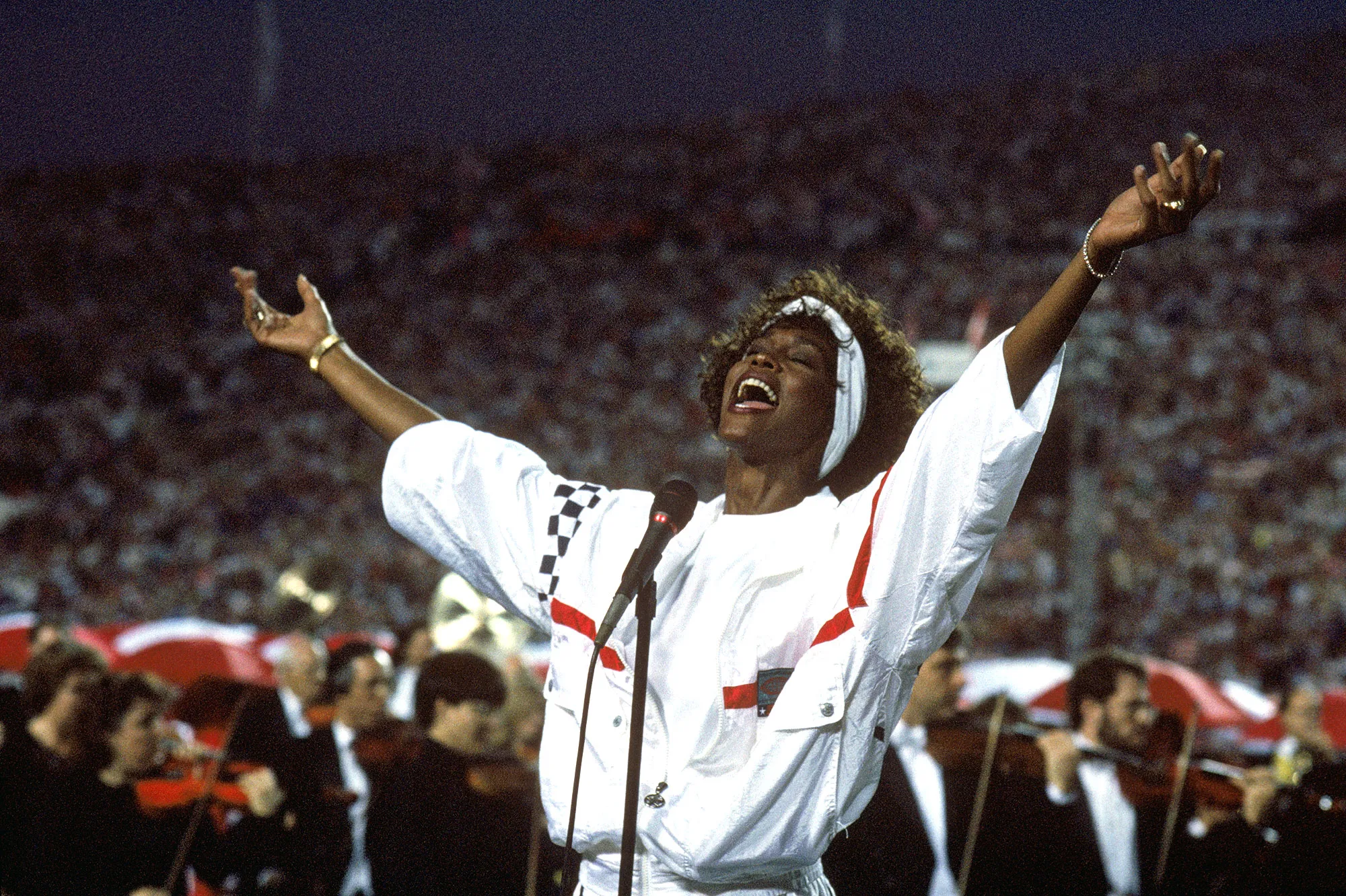
On January 27, 1991, Whitney Houston stepped onto the field at Tampa Stadium before Super Bowl XXV and delivered a version of The Star-Spangled Banner that would become one of the most remembered performances of her career. Coming just days after the United States entered the Persian Gulf War, the moment carried an emotional weight that went far beyond football.
Whitney Houston Was Only 27 When She Took the Super Bowl Stage
At just 27 years old, Whitney Houston was already one of America's biggest recording artists. Yet performing the national anthem at the Super Bowl presented a completely different challenge from singing one of her own songs.
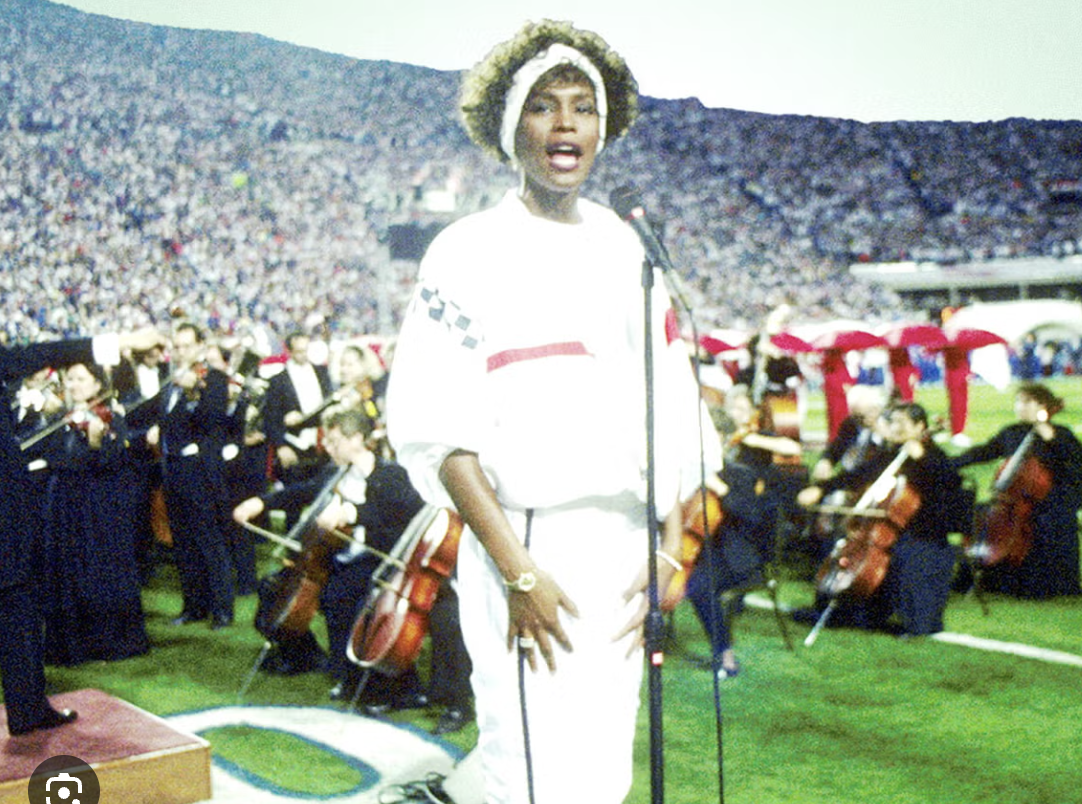
The performance took place at Tampa Stadium, with The Florida Orchestra accompanying Houston under the direction of conductor Jahja Ling. The timing was particularly significant because the ceremony came only 10 days into the Persian Gulf War, when many Americans were deeply concerned about family members and soldiers serving overseas.
The atmosphere gave The Star-Spangled Banner an emotional significance that Houston could not have created through vocal technique alone. Her performance became intertwined with the feelings of a country watching events unfold in the Gulf.
The Arrangement Changed Everything
One of the most important decisions behind Whitney Houston's version was changing the anthem's musical feel. The traditional song was written in 3/4 time, but Houston's team transformed the arrangement into 4/4, creating a slower and more contemporary sound.
Musical director Rickey Minor worked with bassist and arranger John Clayton on the arrangement, while The Florida Orchestra provided the orchestral backing. Rather than simply reproducing the traditional version, they created space for Houston's voice to carry the melody with greater weight and drama.
That decision was not immediately universally accepted. NFL executives reportedly worried that the slower arrangement would be difficult for spectators to sing along with, but Houston's team refused to redo the recording.
The Surprising Truth About the Performance
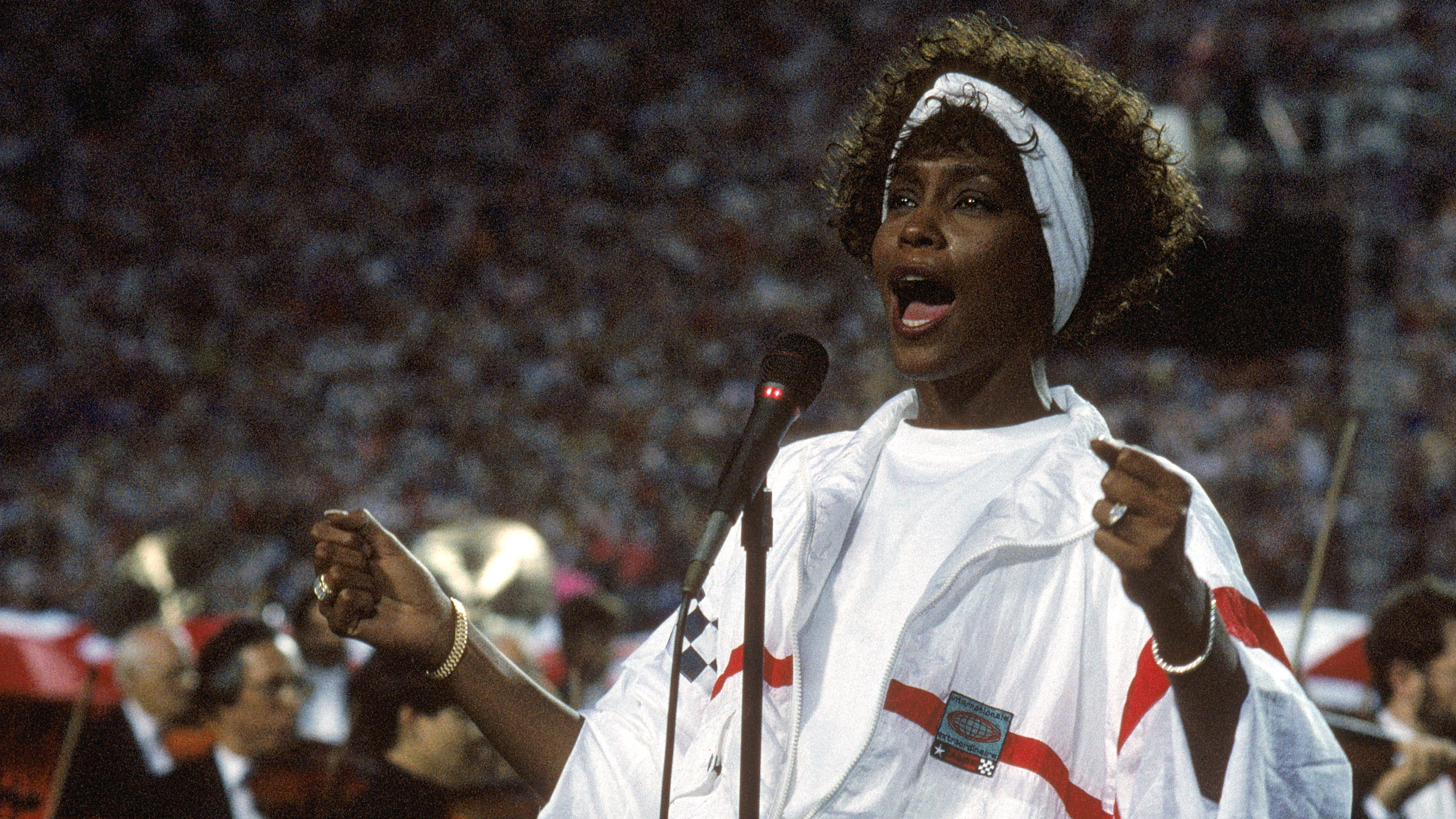
One of the most fascinating details about Whitney Houston's The Star-Spangled Banner is that the audio broadcast was prerecorded. The reason was practical: performing live in a huge open-air stadium created enormous technical risks, particularly because Houston would not be able to hear herself properly over the crowd.
Rickey Minor later recalled that Houston recorded the vocal remarkably quickly. According to his account, she sang the song once in the studio, then recorded another take as a precaution, but the finished version relied primarily on that first take.
Houston nevertheless sang along live at Tampa Stadium, even though the microphone was not carrying the vocal heard by television viewers. That distinction later became controversial, but it did not diminish the emotional impact of the moment for the people watching.
Why Whitney Houston’s Performance Felt So Powerful
The strength of Houston's rendition came from the way she treated the anthem as more than a ceremonial obligation. Instead of rushing through the familiar melody, she allowed the arrangement to build gradually, giving each phrase room to breathe.
Her vocal control was especially striking because the song contains demanding intervals and sustained notes. Houston approached them with the precision of a pop vocalist while bringing the emotional intensity associated with gospel and R&B.
The result was a performance that felt unusually personal for such a massive public event. The stadium audience was not simply hearing a famous singer perform a national song; they were watching Houston transform a familiar piece of American music into something distinctly her own.
America Was Watching During a Difficult Moment
The context of Super Bowl XXV made the performance even more memorable. American troops were serving in the Persian Gulf, and the country was experiencing a mixture of anxiety, patriotism and uncertainty.
The imagery surrounding Houston reinforced that atmosphere, with the American flag, military personnel and the pregame ceremony forming the backdrop to her performance. Her voice became associated with a moment when many Americans were looking for reassurance and unity.
That is one reason the performance continued to resonate long after the football game ended. The Star-Spangled Banner was no longer simply the song performed before the championship game; Whitney Houston's interpretation had become part of the cultural memory surrounding the Gulf War era.
The Performance Became a Hit on Its Own
The reaction to Houston's performance was so strong that Arista Records decided to release the recording as a single. It was an unusual achievement for a national anthem, particularly one recorded for a sporting event.
The 1991 release reached No. 20 on the Billboard Hot 100, making it the most successful recording of the anthem at that point. The single was also certified platinum, demonstrating that the performance had moved well beyond the audience that watched the Super Bowl.
There was also a charitable dimension to the release. According to Houston's official site, royalties and proceeds from the original release were donated to the American Red Cross Gulf Crisis Fund.
The Song Found a New Meaning After September 11
A decade later, The Star-Spangled Banner returned to the spotlight under completely different circumstances.
Following the September 11, 2001 terrorist attacks, Whitney Houston's recording was re-released. This time, the song resonated with another generation of Americans confronting fear, grief and uncertainty.
The rerelease performed even better commercially, reaching No. 6 on the Billboard Hot 100 and topping the Hot 100 Singles Sales chart. Proceeds exceeding $1 million were donated to organizations supporting New York police and firefighters affected by the attacks.
Why Whitney Houston’s The Star-Spangled Banner Still Matters
More than three decades later, Whitney Houston's performance remains one of the defining interpretations of The Star-Spangled Banner. Its impact came from the combination of her extraordinary voice, an unconventional arrangement and the extraordinary circumstances surrounding the performance.
It also became one of those rare recordings that gained new meaning as history changed. First connected to the Gulf War and later revived after September 11, the song continued to represent moments when Americans were searching for strength and unity.
For Whitney Houston, it became much more than another performance. The Star-Spangled Banner became a defining piece of her legacy—and one of the clearest examples of how her voice could turn a familiar song into a moment people would remember for decades.
Conclusion
Whitney Houston's The Star-Spangled Banner was unforgettable not simply because she sang it beautifully, but because her performance arrived at a moment when the country needed something powerful to hold onto. Decades later, that combination of voice, music and history continues to make the 1991 performance extraordinary.
How David Bowie Reinvented Himself and Changed Music Forever

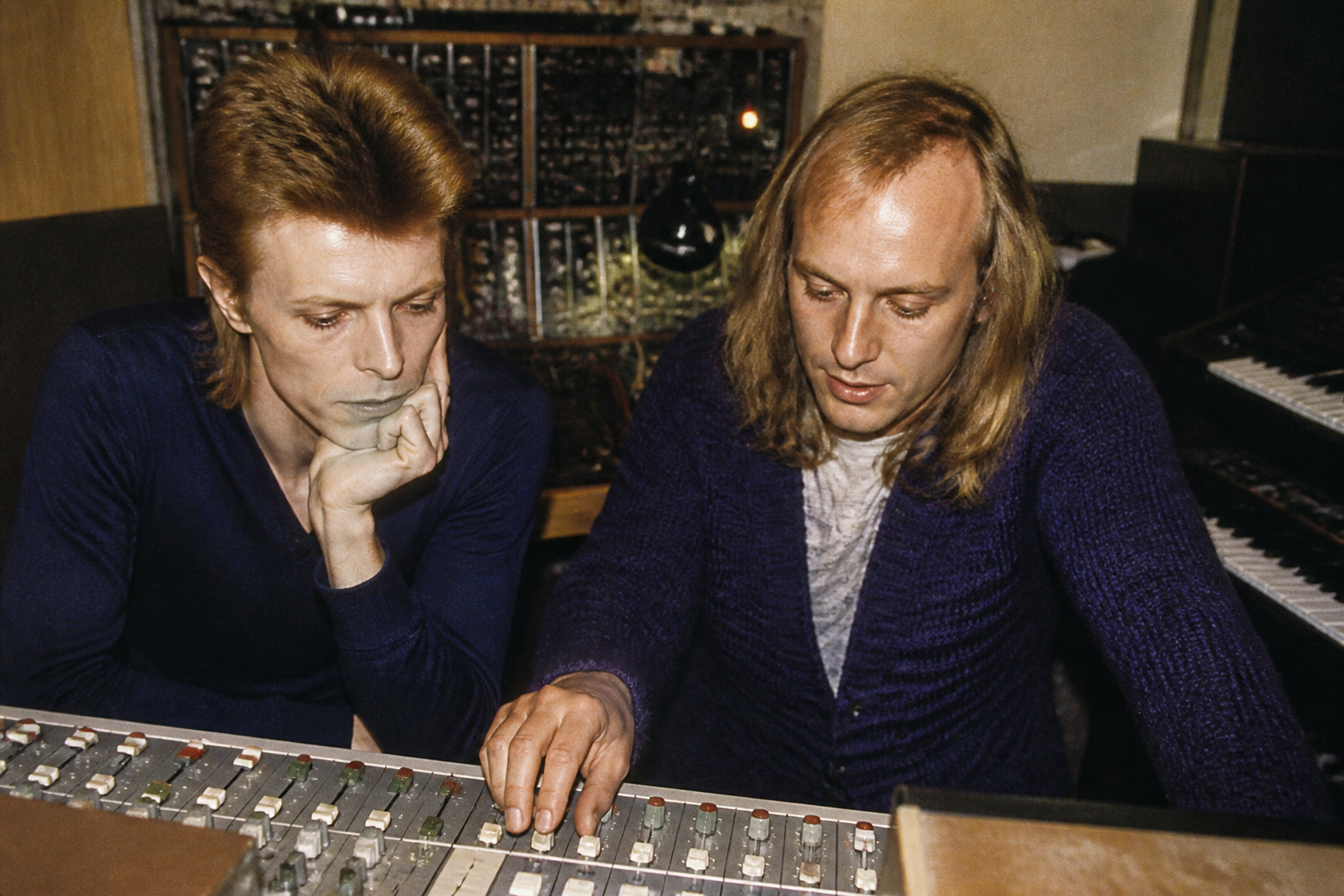
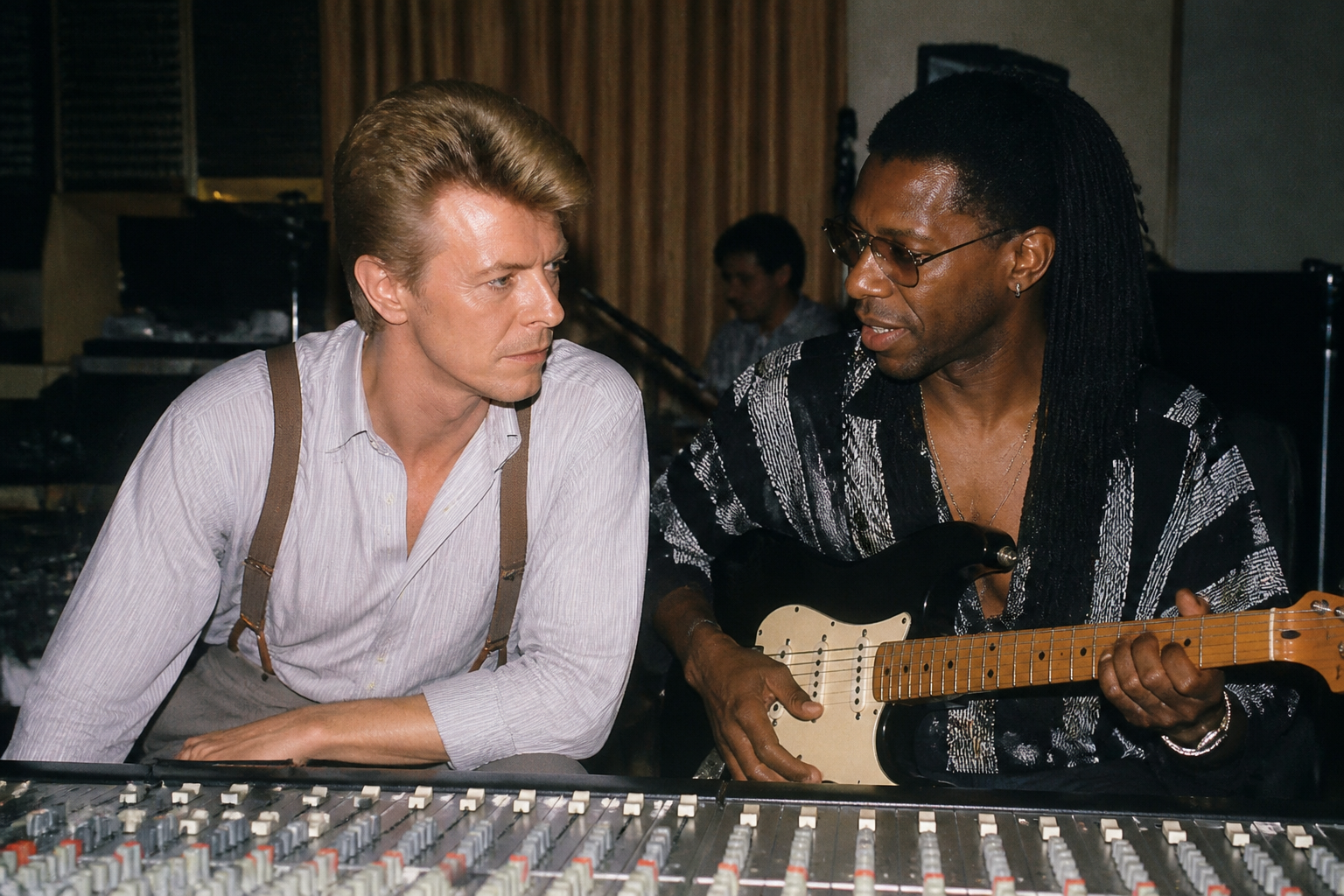
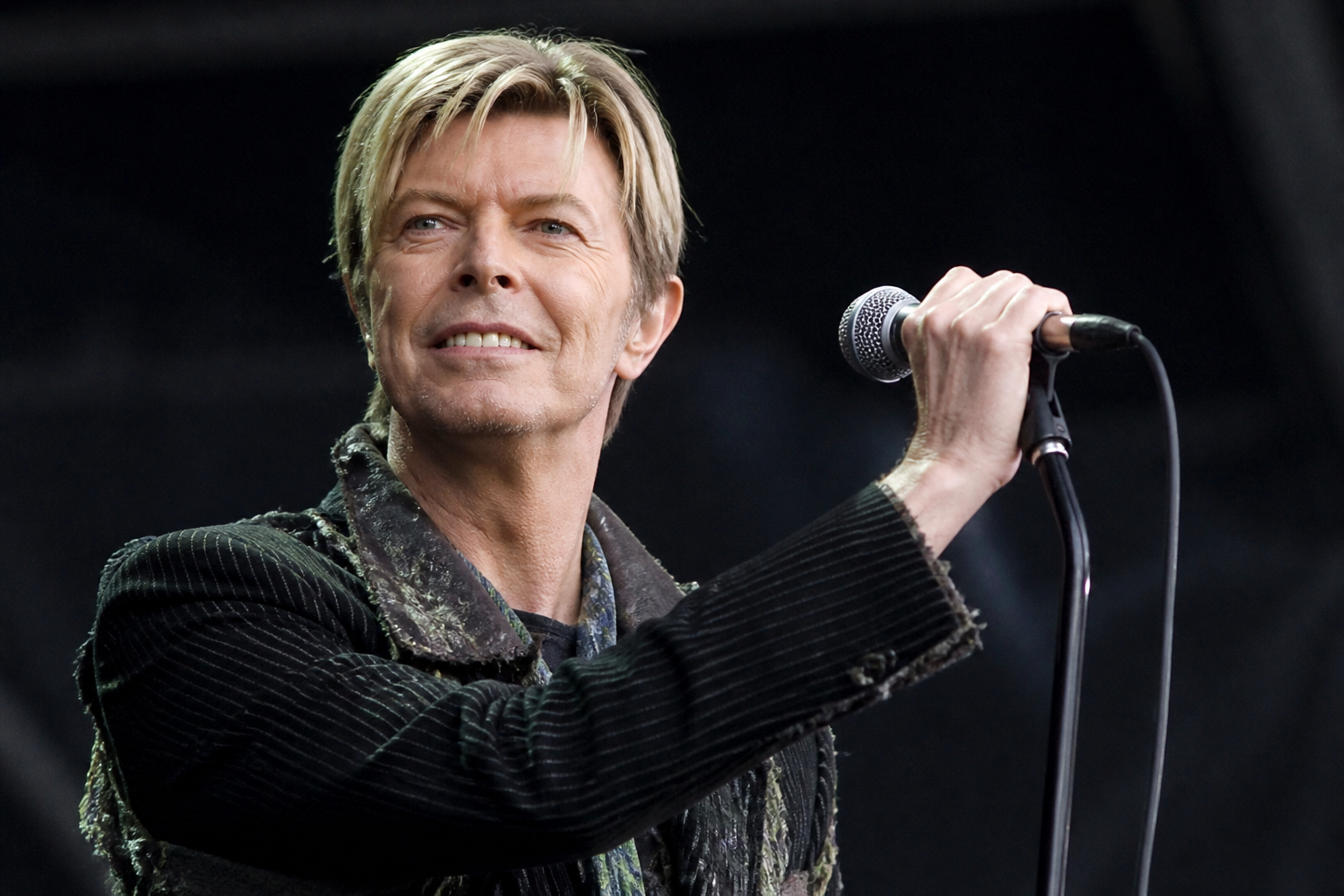
David Bowie made reinvention part of his artistic identity, and popular music has never quite looked the same. Across five decades, he treated image, sound, and performance as connected pieces of one creative vision. That approach made him one of the clearest examples of how a single artist could reshape an era without staying in one place for long.
Comments 0