Introduction
Elvis Presley’s Las Vegas close call is remembered because it happened in the middle of a live show, where every movement was visible and every mistake could spread fast. The story has circulated for years in different forms, but the safest historical reading is careful: a suspicious audience member was reportedly believed to be armed, and the situation was handled before it could become a public crisis.
That distinction matters. The incident is often retold in dramatic language, yet the surviving accounts are not uniform enough to support a neat, fully documented play-by-play. What can be said with confidence is that a Las Vegas performance briefly turned tense, and that Elvis Presley and the people around him were forced to react in real time. 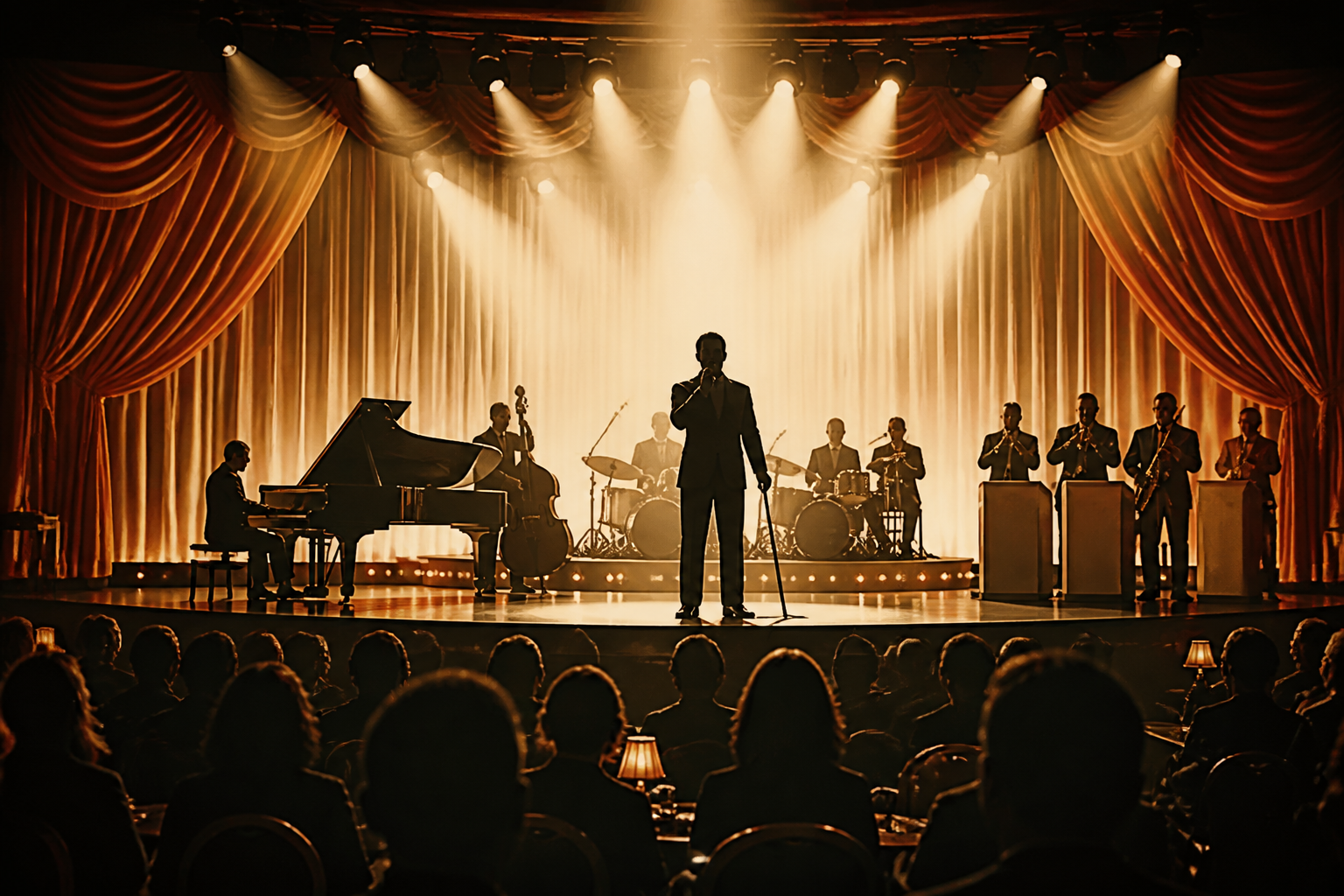
Why the Las Vegas setting mattered
To understand why Elvis Presley’s Las Vegas close call still draws attention, it helps to picture the room. By the late 1960s and early 1970s, Elvis was performing in the city’s showroom circuit, including the International Hotel, which later became the Las Vegas Hilton. These were not arena shows with long sightlines and heavy separation between stage and crowd. They were intimate rooms, built for dinner, drinks, and close-up entertainment.
That intimacy was part of the appeal, but it also increased the risk of sudden disruption. A performer stood only a short distance from people who might be celebrating, distracted, intoxicated, or unpredictable. In that environment, a single troubling gesture from the audience could change the mood of the entire room. 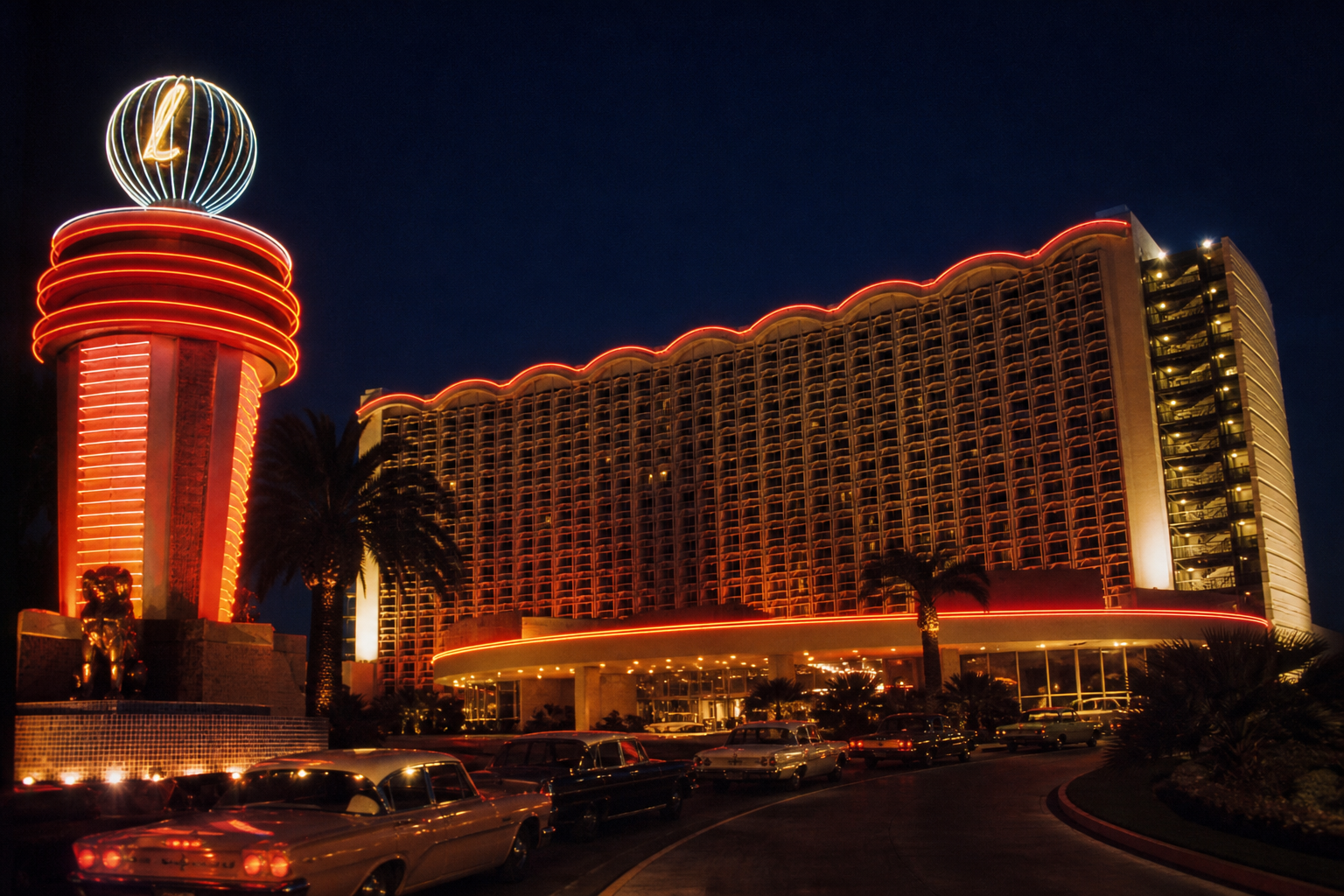
Elvis’s Las Vegas engagements have often been discussed as carefully staged productions, with set lists, costumes, and choreography all tightly managed. Yet even the most controlled show could not fully control the audience. That is why the reported threat feels so plausible within the setting, even when the exact details remain difficult to verify from one authoritative source.
What can be documented, and what cannot
The main challenge with Elvis Presley’s Las Vegas close call is that later retellings are more common than a single, complete official record. Some accounts describe a man in the audience who appeared armed or was thought to be carrying a weapon. Others are less specific and simply note that security or nearby staff became concerned. The differences are important, because they separate what is clearly documented from what has been added in retelling.
It is not responsible to claim a fully verified attempted shooting unless the evidence supports that label. In this case, the available material points more cautiously to a suspected threat during a live performance. That is still serious. It is just not the same thing as proving a completed attack or a formal assassination attempt. 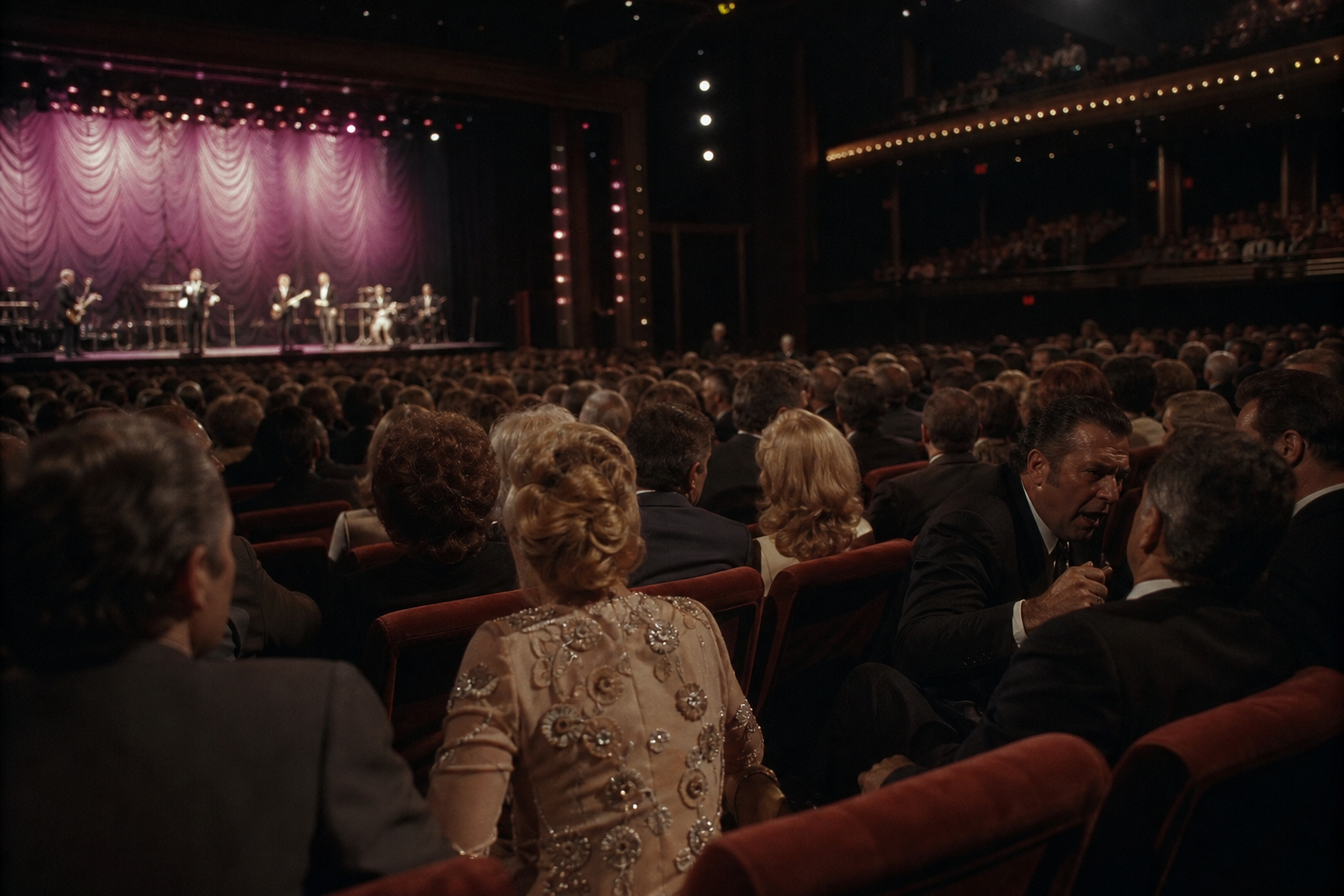
Because the story survives largely through recollections, the date and exact venue are not always repeated consistently in secondary summaries. The broader historical frame is still useful: the incident belongs to Elvis’s Las Vegas performance years, when he was appearing regularly in major hotel showrooms and drawing large, mixed audiences night after night.
Elvis Presley’s Las Vegas close call
In the versions of the story that circulate most often, the tension began while Elvis was onstage and someone in the audience drew attention for the wrong reason. The concern was serious enough that people near the stage or on security detail reacted quickly. What happened next is described less consistently, but the common thread is clear: the situation was contained before it could escalate into a public shooting.
That is the key historical point. The event was frightening precisely because it happened in a live performance space, where there was no time to step back and reassess. If a person in the audience was believed to be armed, the danger would have been immediate, and the response would have had to be swift. 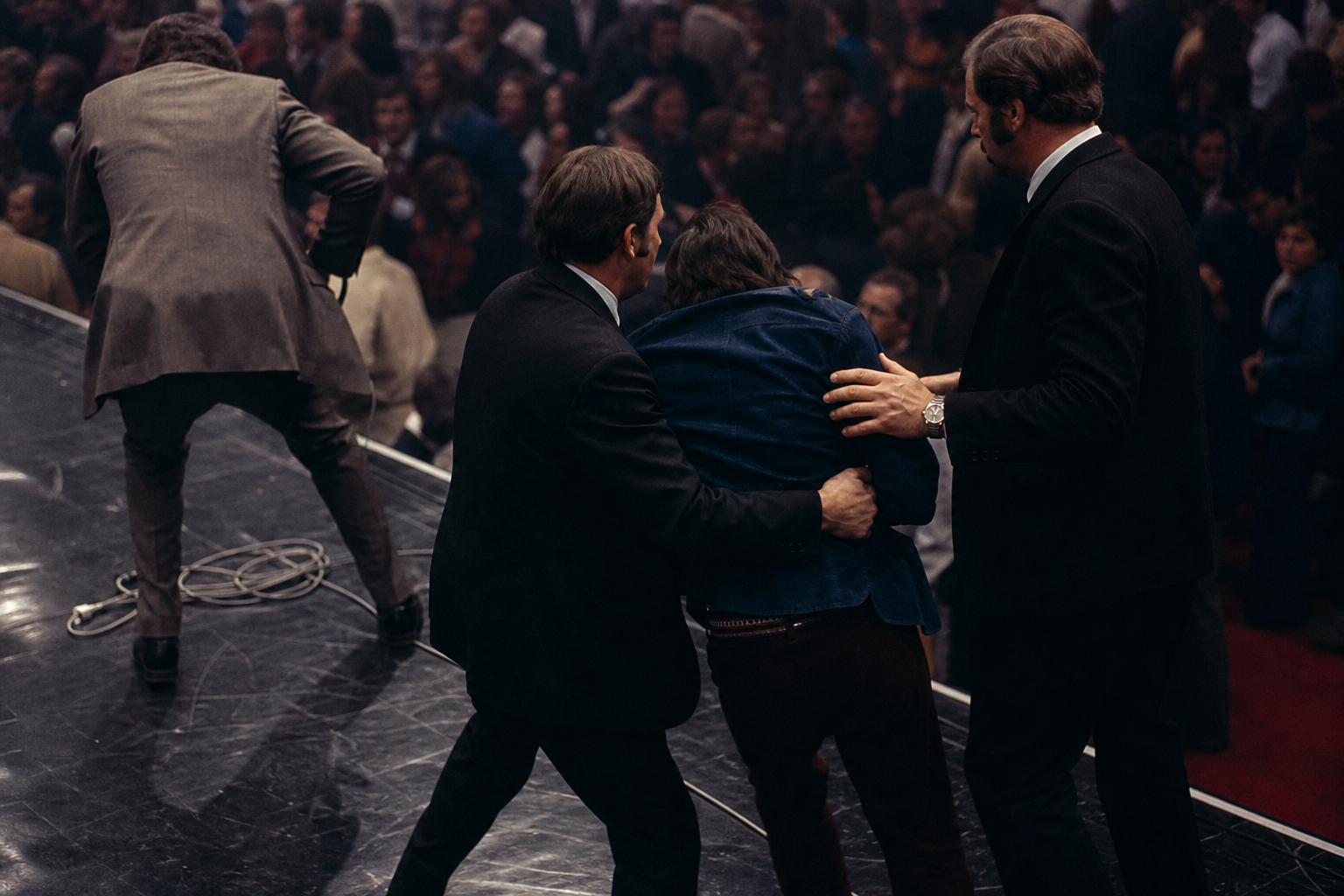
Some versions of the story suggest a visible disturbance in the room. Others imply that the concern was handled quietly enough that most audience members may not have understood how serious it was. Those two possibilities are not contradictory. In a Las Vegas showroom, a security response could be urgent while still trying not to interrupt the performance more than necessary.
How security likely handled the moment
It would be easy to imagine a dramatic confrontation, but the available evidence does not justify that kind of certainty. A more cautious reading is that Elvis’s team and venue personnel recognized a possible threat and acted to reduce the risk. In a room built around close proximity, that would have meant moving fast and keeping the situation under control.
At the time, celebrity security did not have the layers of surveillance and screening common today. Protection depended heavily on observation, experience, and the ability of staff to read a room quickly. That made Las Vegas showrooms especially vulnerable to sudden problems, because the performer was exposed and the audience was close enough to create immediate danger. 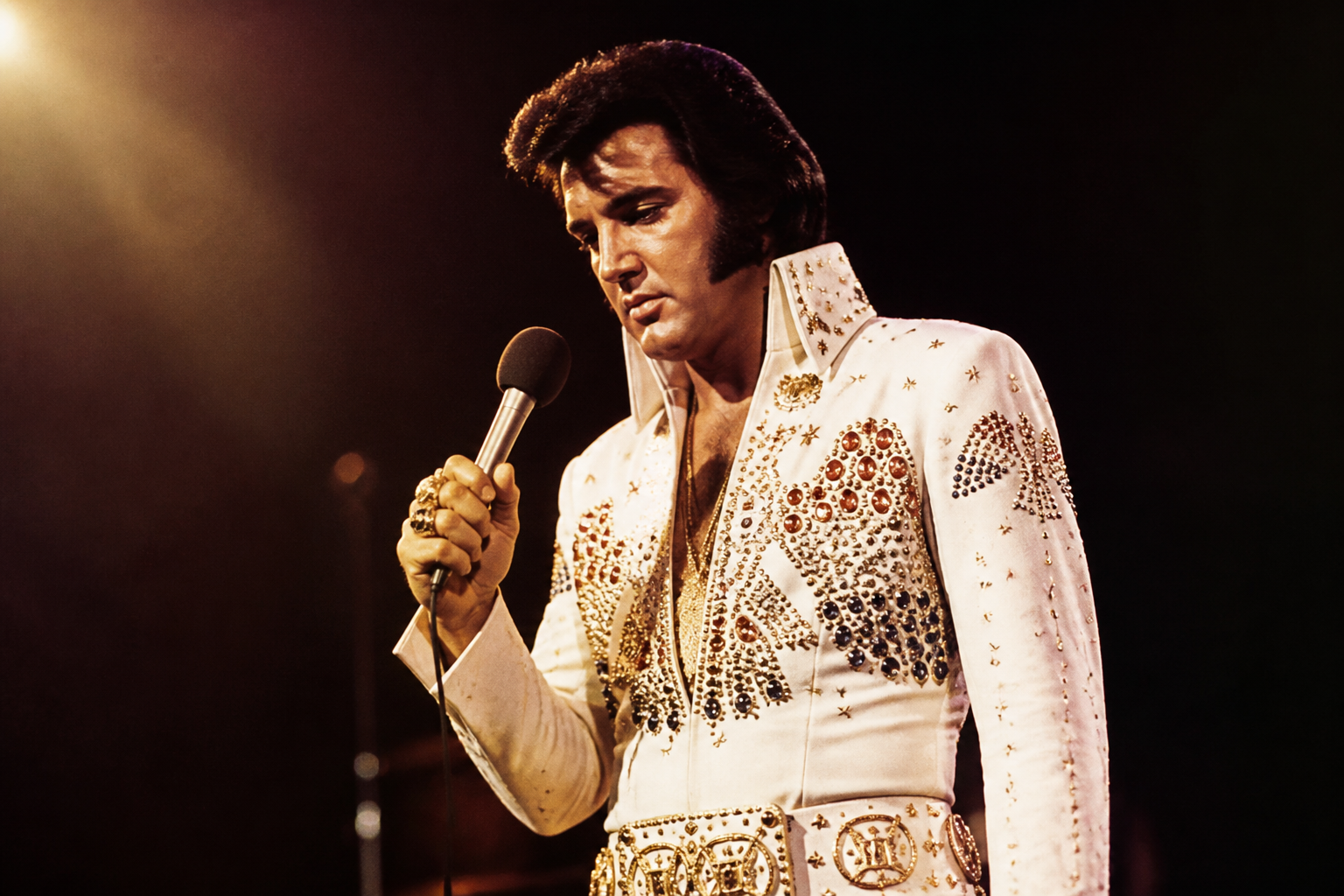
There is no reason to invent dramatic dialogue or a precise backstage exchange. The safer historical conclusion is simpler: someone noticed a possible weapon or a possible threat, and the people responsible for the show responded before the problem became a larger incident. That is enough to explain why the story remained memorable.
Elvis onstage during the tension
Elvis Presley’s own reaction is another area where later retellings can drift beyond the evidence. There is no reliable basis for claiming he made a specific remark or staged a dramatic pause. What can be said is that he was a seasoned live performer who understood how to keep a show moving, even when the room shifted around him.
That skill mattered. A singer in the middle of a Las Vegas number could not afford to panic, and he could not easily leave the stage without making the moment worse. The most effective response in that situation would have been composure. If Elvis continued performing while security handled the concern, that would fit the practical demands of the setting. 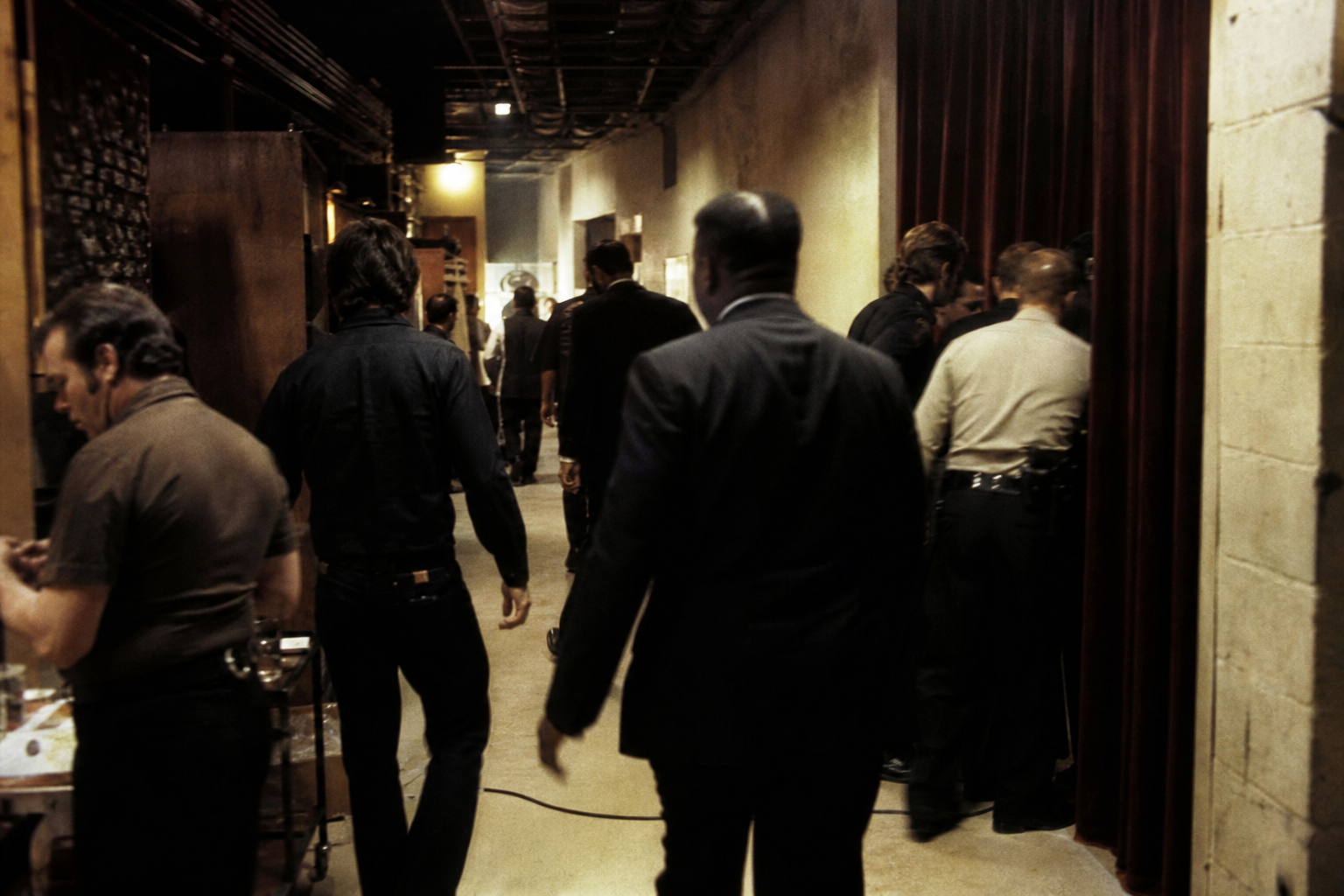
This is one reason the story has lasted. It reveals a side of live performance that polished recordings never show. The audience sees confidence, but the performer and crew are also managing risk. In Elvis’s case, the contrast between glamour and vulnerability was especially sharp.
The human stakes of a showroom scare
Even a brief security scare can leave a lasting impression on the people in the room. In a Las Vegas showroom, the audience is close enough to sense a change in atmosphere almost immediately. A shift in body language, a tightening at the edges of the stage, or a sudden movement from security can be enough to signal that something is wrong.
That human element is part of what gives Elvis Presley’s Las Vegas close call its force. The story is not only about a star under pressure. It is also about everyone else in the room, including staff and audience members who may have realized, even only in retrospect, that the situation had been more serious than the performance suggested. 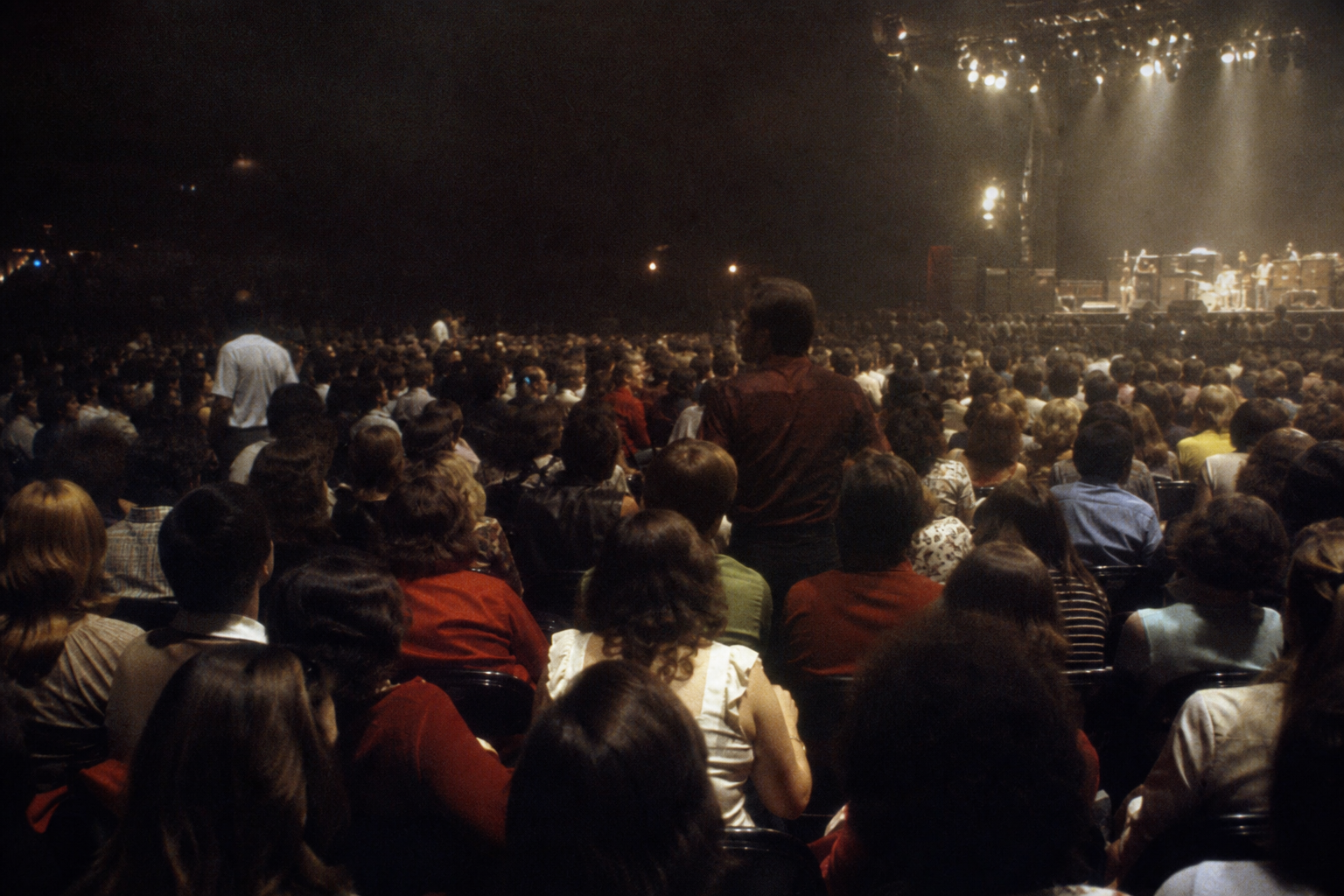
Because the incident is remembered in fragments, it can be tempting to fill in the blanks with a more dramatic version. But the historical value of the story is stronger when the uncertainty is preserved. A suspected armed threat during a live Elvis show is already enough to show how fragile the setting could be.
Why the story survives in Elvis history
Elvis Presley’s Las Vegas close call survives because it belongs to a larger pattern in entertainment history: the moment when a carefully managed public performance meets the unpredictability of the crowd. That tension was especially sharp in Las Vegas, where the show was intimate, the audience was mixed, and the performer was visible from very near range.
The episode also sits within the broader history of how major entertainers were protected in the 1970s. Security teams were present, but the tools available to them were limited compared with modern standards. A threat could appear suddenly, and the response depended on people noticing it quickly enough to keep the situation from spreading. The story is therefore less about melodrama than about the practical realities of live performance.
For readers interested in how Presley’s stage career evolved, his Las Vegas years are often discussed alongside other turning points in his career, including the late-1960s comeback that re-centered him as a live performer. That broader context helps explain why the showroom years drew so much attention from fans and historians alike. For more on that period, see this overview of Elvis’s 1968 comeback special.
What the incident does and does not prove
The strongest responsible conclusion is not that Elvis Presley was definitively the target of a fully documented assassination attempt. The stronger claim is narrower and better supported by the way the story is usually preserved: during a Las Vegas performance, a person in the audience was reportedly believed to pose an armed threat, and the situation was handled before it became a shooting.
That may sound less dramatic, but it is historically more careful. It respects the difference between rumor, recollection, and verified fact. It also avoids overstating the danger in a way that the evidence cannot support. In music history, precision matters as much as atmosphere. {{IMAGE:8}}
What remains compelling is the vulnerability of the moment. Elvis was performing in a place designed for spectacle, yet the room could still turn tense in an instant. That balance between control and uncertainty is what makes the incident worth remembering.
Las Vegas, risk, and the live Elvis show
The Las Vegas years were central to Elvis’s stage identity, but they were also years in which the mechanics of performance became impossible to ignore. He was no longer simply a recording star appearing on television or in films. He was a live attraction in a room where the audience could be close, loud, and unpredictable.
That is why Elvis Presley’s Las Vegas close call matters as a historical episode. It shows how fame changes the meaning of a stage. The same spotlight that creates excitement can also expose a performer to risk. In Elvis’s case, the danger was not abstract. It was close enough to be remembered decades later, even if the surviving accounts do not agree on every detail.
For a broader music-history comparison, it is worth looking at how other live performances have become part of public memory for reasons beyond the songs themselves. One example is this article on Whitney Houston’s Super Bowl national anthem, which shows how a single performance can take on a life of its own. Elvis’s Las Vegas scare belongs to that same larger world of live moments that outlast the set list.
Conclusion
Elvis Presley’s Las Vegas close call remains a striking story because it is rooted in a real performance setting, yet still surrounded by uncertainty. The incident should be treated with care: a suspected armed threat was reportedly noticed during a show, but the exact sequence of events is not fully standardized across sources. That caution does not weaken the story. It makes it more credible.
What happened in that showroom was not just a celebrity anecdote. It was a reminder that live music can change in a second, even in a room built for glamour and control. Elvis Presley’s Las Vegas close call endures because it captures that fragile line between entertainment and danger, and because it shows how quickly a performance can become something else entirely.
For readers who want to place the episode within Presley’s wider stage career, this look at Elvis’s Las Vegas performances offers additional background on the residency years that made the incident possible.
How David Bowie Reinvented Himself and Changed Music Forever

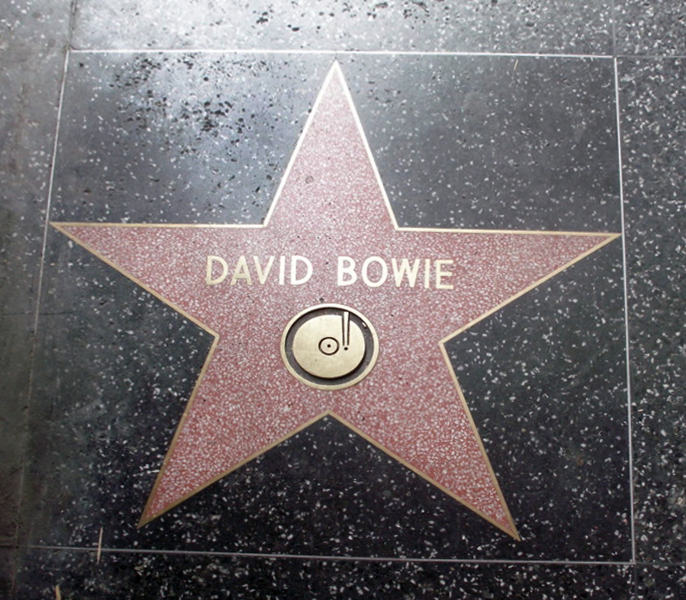
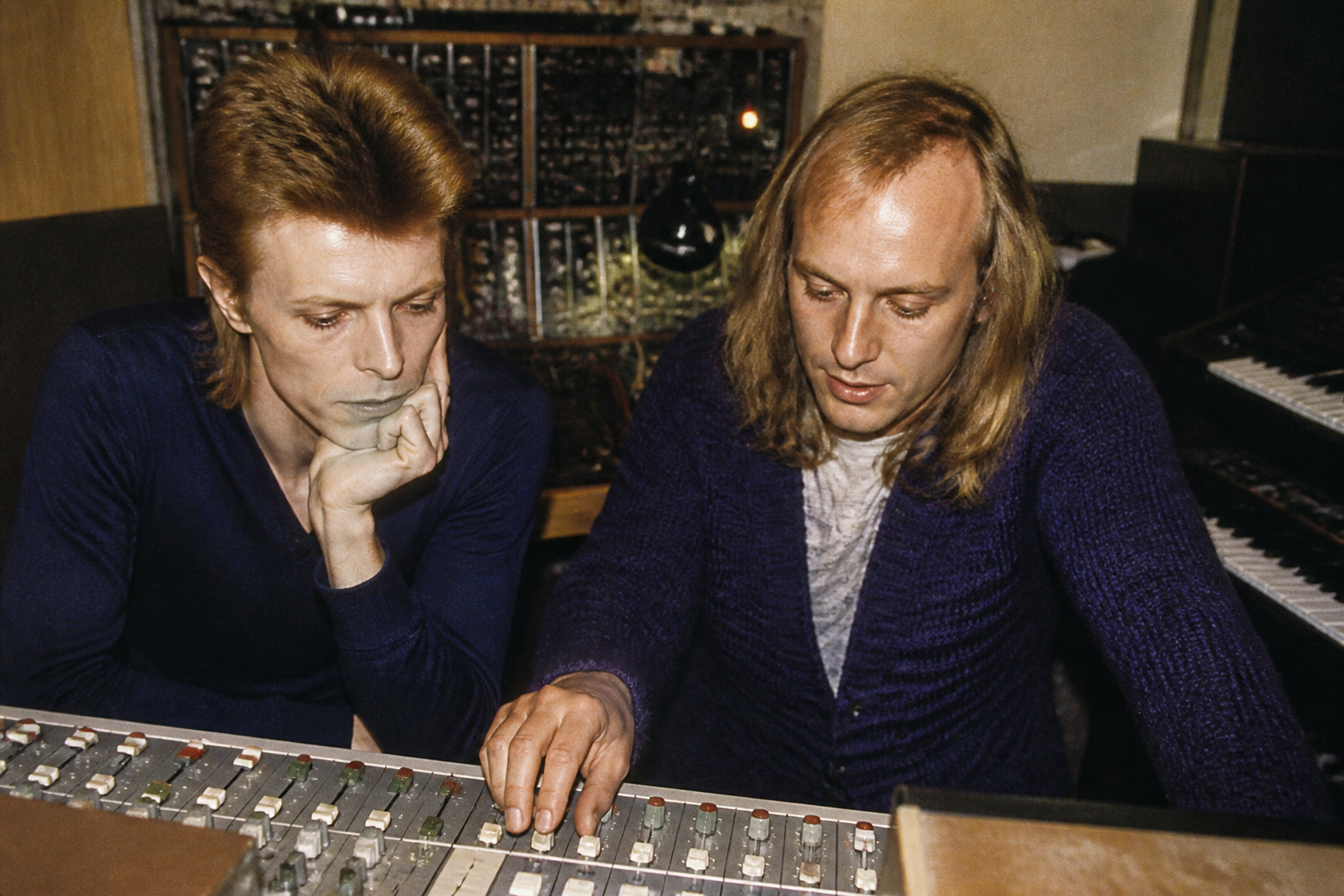
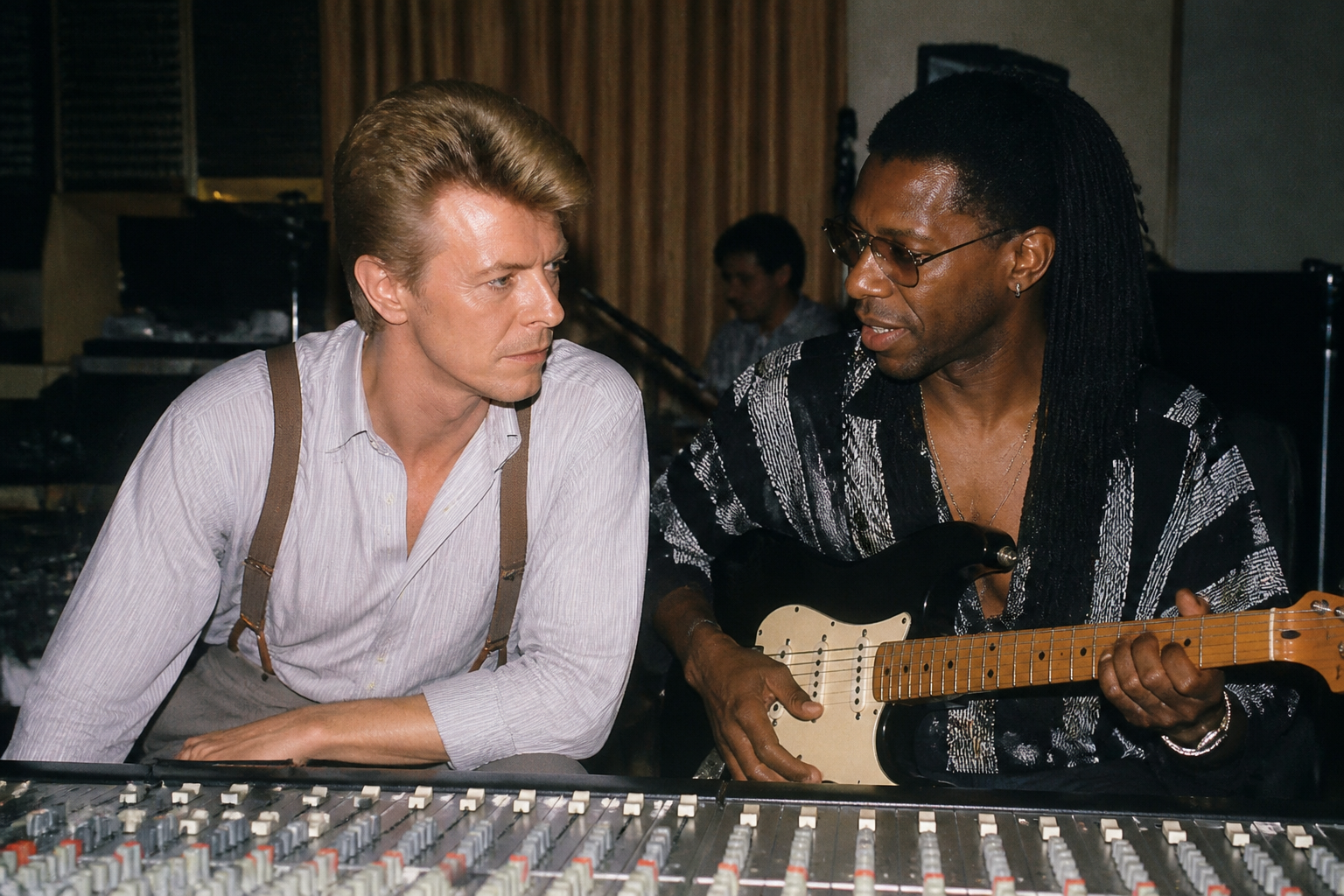
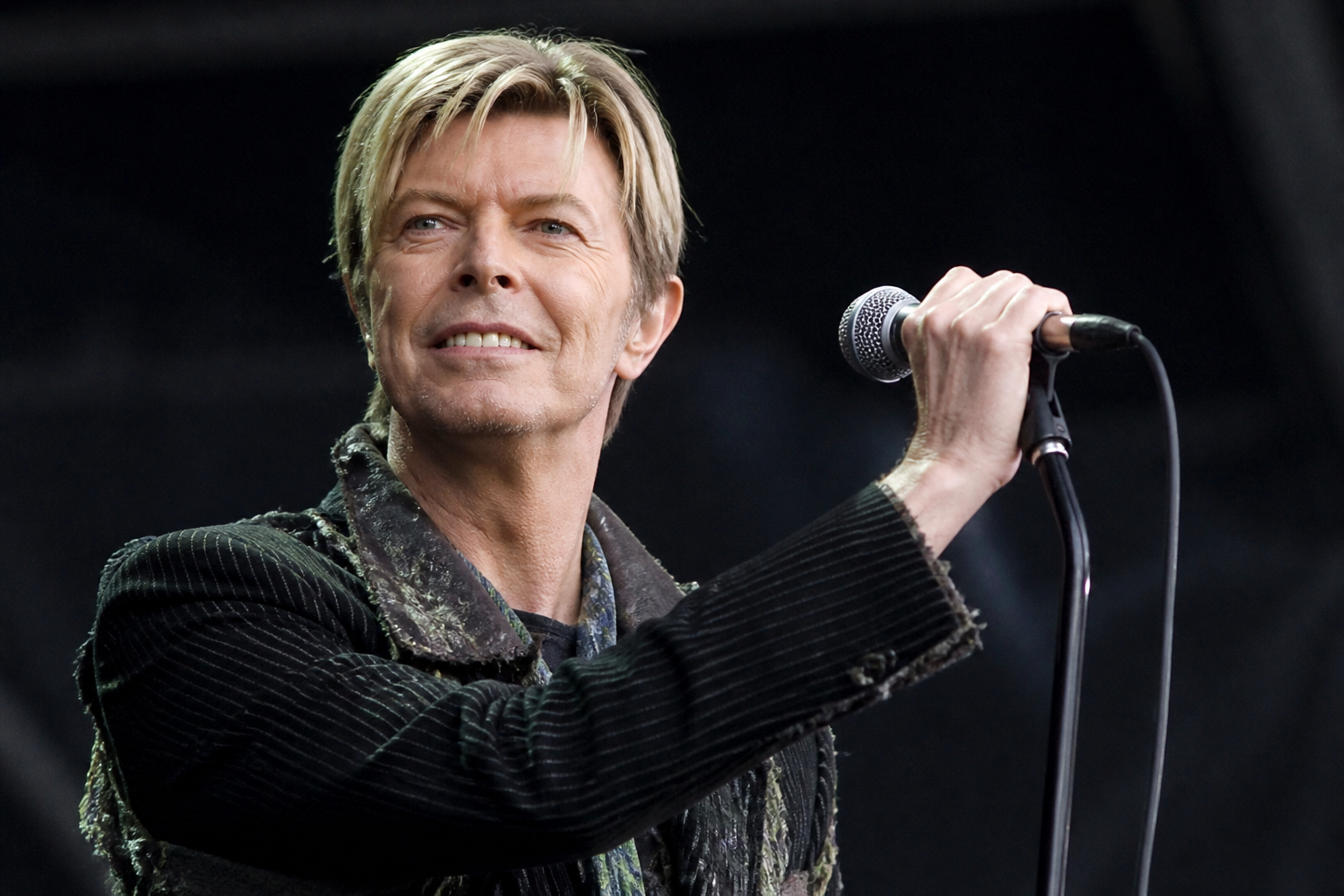
David Bowie made reinvention part of his artistic identity, and popular music has never quite looked the same. Across five decades, he treated image, sound, and performance as connected pieces of one creative vision. That approach made him one of the clearest examples of how a single artist could reshape an era without staying in one place for long.
Comments 0