This article examines the public record and contemporaneous reporting about the brief 1990s marriage between Michael Jackson and Lisa Marie Presley. It focuses on verifiable legal milestones while explaining the range of contextual pressures reported by reputable sources. The aim is to separate documented facts from speculation and to offer a balanced picture for readers and researchers.

Quick factual timeline
Official documents and widely reported facts establish the basic legal milestones: the marriage took place in 1994, and a divorce filing followed in 1996 citing irreconcilable differences. Those entries are what the court record shows and what contemporaneous mainstream reporting recorded.
What the legal filings show — and what they don’t
Court paperwork in cases like this typically records procedural facts and standard legal language. The 1996 filing used a no‑fault phrase common in such filings: irreconcilable differences. That wording documents the legal end of the marriage but does not assign specific private causes.
Because filings rarely include private conversations, motives, or detailed personal histories, reporters and historians combine legal records with interviews, contemporaneous coverage, and published biographies to build context. Where the public record is silent, responsible accounts note the limits of what can be proved.

How public attention shaped the relationship
One recurring theme in contemporary reporting and later profiles is the extreme media attention both partners received. Jackson had been an international star for decades; Presley carried a famously visible family legacy as Elvis Presley’s daughter. Their marriage unfolded under intense public scrutiny.
Media attention affects private life in several ways: it increases surveillance, encourages speculation, and can make ordinary disagreements public. Reporters from publications such as The New York Times, the Los Angeles Times, and People documented how press coverage amplified details of the couple’s life during their marriage and after their separation.

Contrasting daily routines and expectations
Profiles and interviews from the period noted differences in daily life, work rhythms, and personal priorities. Long hours, touring schedules, and separate professional commitments often make coordination difficult in high‑profile relationships.
Reporting suggests that mismatched routines were one of several background stressors, not a single legal reason for the end of the marriage. Journalists and later biographers presented those lifestyle differences as plausible contributors rather than court‑documented causes.
Industry demands and career pressures
The music business in the mid‑1990s placed heavy demands on major artists: promotional schedules, media obligations, recording deadlines, and touring were common stressors. Those professional pressures appear in industry reporting as part of the couple’s public context.
Analysts and cultural commentators have pointed out that balancing two public careers can intensify tensions. For this marriage, contemporary accounts placed career demands alongside other pressures as part of a broader explanation for the separation.
Media narratives, rumor, and the challenge of verification
The couple’s relationship attracted many competing stories. Tabloid pieces often made dramatic claims that were not corroborated by primary documents or named sources. More careful outlets and later longform pieces emphasized uncertainty where claims could not be verified.
Responsible readers should treat uncorroborated rumor cautiously and prioritize named‑source journalism, court records, and archival reporting. Several longform accounts and investigative pieces published after the fact lay out where accounts differ and where documentation exists.

Public statements and private negotiations
Both individuals made public comments at various times, but neither offered a single, comprehensive public account that fully explains the marriage’s end. Public remarks tended to reflect emotion, personal perspective, or brief explanations.
Because private negotiations and conversations are not part of the public record, the official filings remain the core documentary evidence. Readers should therefore treat published statements as part of the narrative context rather than definitive legal evidence.

Health, medication, and personal struggles in reporting
Some contemporaneous and later reporting discussed health matters and prescription medication in relation to one partner’s wellbeing. Journalists and biographers took care in separating confirmed medical facts from conjecture about how such issues might have affected the relationship.
Academic literature on relationships shows that health and substance issues can increase strain. In coverage of this marriage, such topics appear as contextual factors that may have intensified tensions; they are not recorded as legal grounds in the filings.
Family history and public legacy
Family legacy and personal history can shape public expectations and private choices. Presley’s status as Elvis Presley’s daughter added another public dimension to the union, and commentators have noted how legacy concerns can complicate identity and public roles.
Biographical treatments of both figures place family history and legacy alongside other pressures as plausible influences on the relationship’s trajectory. These are treated in those accounts as context rather than formal, provable legal reasons.

Financial and legal handling of the separation
Public filings suggest the legal process followed standard procedures for a dissolution that invoked no‑fault language. Contemporary reporting does not show a prolonged, highly public courtroom battle over assets in this case.
That said, many celebrity separations involve private negotiations. When such negotiations occur outside full court hearings, they may not appear in public documents in detail. Researchers should consult court dockets and filings for specifics where they exist.
Common misconceptions and persistent myths
Because the union involved two high‑profile figures, several myths and simplified narratives have circulated. The public often favors a single cause or a dramatic turning point, but the documentary record does not support one neat, provable explanation.
A better reading of the evidence is that multiple pressures, rather than one decisive event, explain why the marriage ended. This multiplicity accounts for disagreements among contemporary reports and later biographies.

How reputable reporting and biographical work approach the topic
Good journalism and responsible biography distinguish among three types of material: primary documents (court filings, contemporaneous interviews), named‑source reporting, and anonymous or speculative claims. Reputable outlets and careful biographers clearly label which type of evidence they rely upon.
Readers interested in deeper study can consult contemporaneous articles in major newspapers and longform magazine pieces, as well as biographies by experienced writers who cite sources. Examples of outlets and authors that have covered the topic include The New York Times, Los Angeles Times, People magazine, and biographers who have written extensively about Michael Jackson. Those works combine named interviews, archival reporting, and legal documentation to trace what the public record shows.
Key takeaways for readers
- The documented legal facts are straightforward: a 1994 marriage and a 1996 filing citing irreconcilable differences.
- Contemporaneous reporting and later biographies identify several contextual pressures — intense public scrutiny, conflicting routines, industry demands, family legacy, and health‑related concerns — that plausibly contributed to the separation.
- No single private cause is visible in the public legal record; responsible accounts present a multicausal explanation and note where evidence is limited or disputed.
Practical steps for further research
To verify claims and understand the case in depth, consider the following steps:
- Consult court records and filings where available; these provide the baseline legal facts.
- Search contemporaneous reporting from named outlets (newspapers, magazines) rather than relying on tabloid summaries.
- Look for biographies and longform pieces that cite named interviews and primary documents; check their citation practice.
- Be cautious with anonymous or second‑hand accounts and treat them as tentative unless corroborated.
Selected sources and further reading
For readers who want named references, reputable starting points include archival reporting from The New York Times and the Los Angeles Times, contemporary People magazine coverage, and longform biographies and investigative journalism that document sources. Readers should also consult public court records where possible. Specific titles and authors have discussed aspects of both figures’ lives in detail; seek editions and articles that clearly indicate their sources.
Note: This article avoids citing sensational tabloids and emphasizes established outlets and named‑source work. When an author or outlet relies primarily on anonymous claims, good practice is to mark those claims as such; readers should give them proportionally less weight than named, document‑based reporting.
Image guidance for editors
The existing placeholders correspond to editorial images that avoid identifying private moments. Suggested image choices remain the same: photographs of documents, non‑identifiable locations, symbolic imagery, and objects that illustrate public life and legal processes without intruding on privacy. These images complement the article while remaining respectful of the subjects.
- Hands clasped over divorce papers — filename: hands-over-documents.jpg; alt: hands holding legal documents on a table; placement: near the quick factual timeline section.
- A quiet Los Angeles street at dusk — filename: la-street-dusk.jpg; alt: empty residential street in los angeles at dusk; placement: near the section on media scrutiny and privacy.
- A worn tour-schedule notebook and headphones — filename: tour-notebook-headphones.jpg; alt: spiral notebook with handwritten schedule beside headphones; placement: near music industry pressures section.
- Silhouetted pair walking apart in a park — filename: silhouettes-walking-apart.jpg; alt: two silhouettes walking away from each other in a park; placement: near lifestyle differences section.
- An open legal folder on a desk — filename: open-legal-folder.jpg; alt: open folder with papers and a pen on a desk; placement: near statements and legal filings section.
- A vintage family photograph on a tabletop (non-identifiable) — filename: vintage-family-photo.jpg; alt: small vintage photograph lying on a wooden table; placement: near family histories section.
- A closed theater curtain and a single spotlight — filename: theater-curtain-spotlight.jpg; alt: closed theater curtain with a single spotlight shining on stage; placement: near careers and legacies section.
Closing perspective
The public record shows clear legal steps: marriage in 1994 followed by a 1996 filing that cited irreconcilable differences. Beyond these filings, contemporary reporting and reputable biographical work identify multiple contextual pressures that together provide a plausible explanation for why the marriage ended. Readers and researchers who want to explore the topic further should prioritize primary documents, contemporaneous journalism from named outlets, and biographical work that discloses sources.
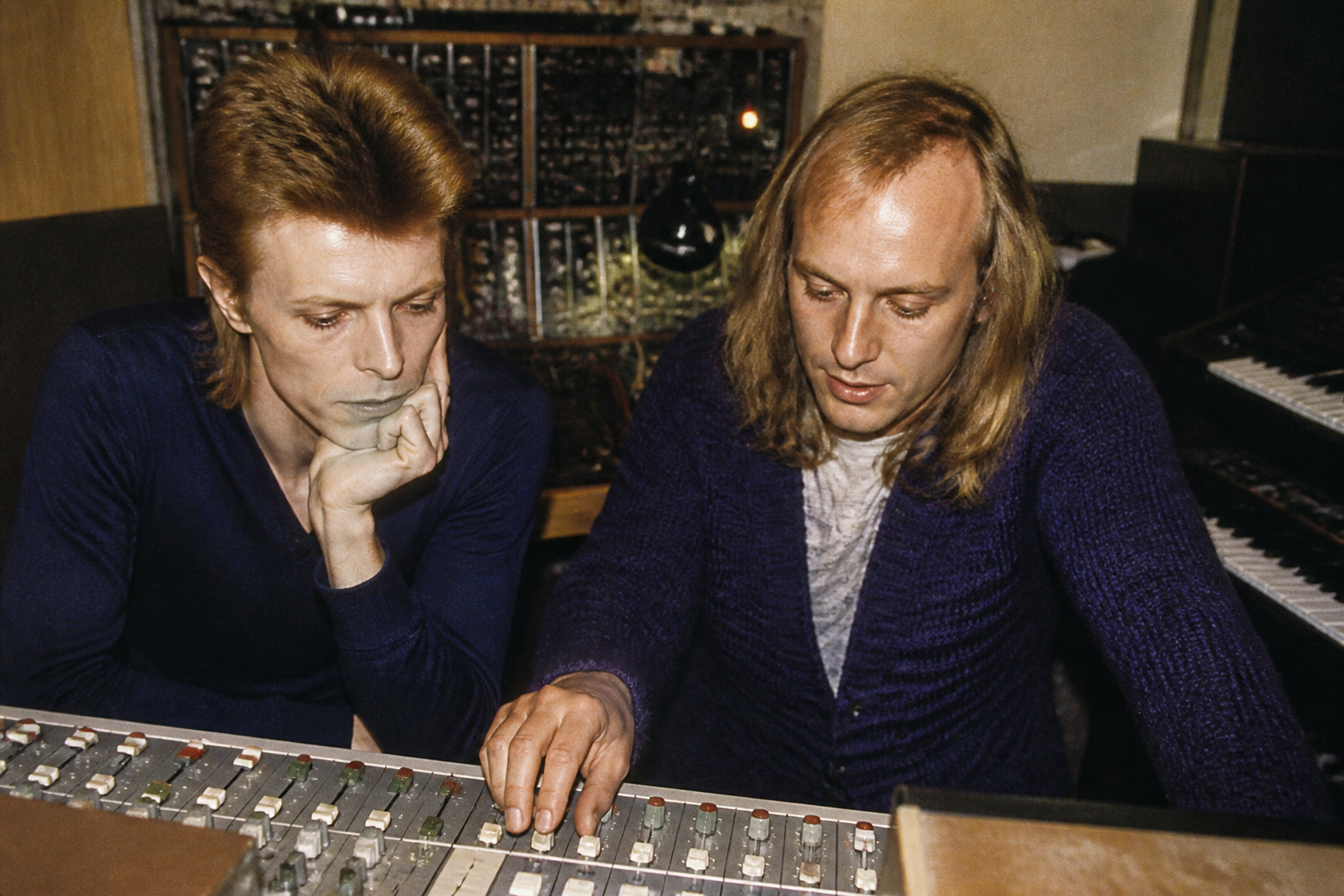
How David Bowie Reinvented Himself and Changed Music Forever

David Bowie made reinvention part of his artistic identity, and popular music has never quite looked the same. Across five decades, he treated image, sound, and performance as connected pieces of one creative vision. That approach made him one of the clearest examples of how a single artist could reshape an era without staying in one place for long.



Comments 0